The hills like white elephants meaning is closely tied to the hidden conflict in Ernest Hemingway’s short story Hills Like White Elephants.
At its heart, the story is about a couple facing a difficult decision about an abortion. The hills, the white elephants, the drinks, and even the couple’s short conversation all carry deeper meanings.
Hemingway never directly explains everything, so readers must look closely at the dialogue and symbols. This makes the story interesting but also confusing at first.
In this guide, we will explain the story’s main meaning in simple language, explore its symbols, discuss the relationship between the two characters, and explain why the title is so important.
Quick Answer: What Does Hills Like White Elephants Mean?
The phrase hills like white elephants refers to the unusual hills that Jig sees while sitting at a train station in Spain. She says they look like white elephants because their shape reminds her of the large animals.
The phrase also has a deeper meaning. A white elephant can describe something that is difficult, unwanted, or expensive to deal with. In Hemingway’s story, the hills can represent the difficult pregnancy and the choice facing Jig and the American man.
The hills also show how differently the two characters see the same situation. Jig sees beauty and possibility in the landscape, while the man focuses on the practical problem in front of them.
What Is the Main Meaning of the Story?
Hills Like White Elephants is mainly about choice, communication, relationships, and abortion.
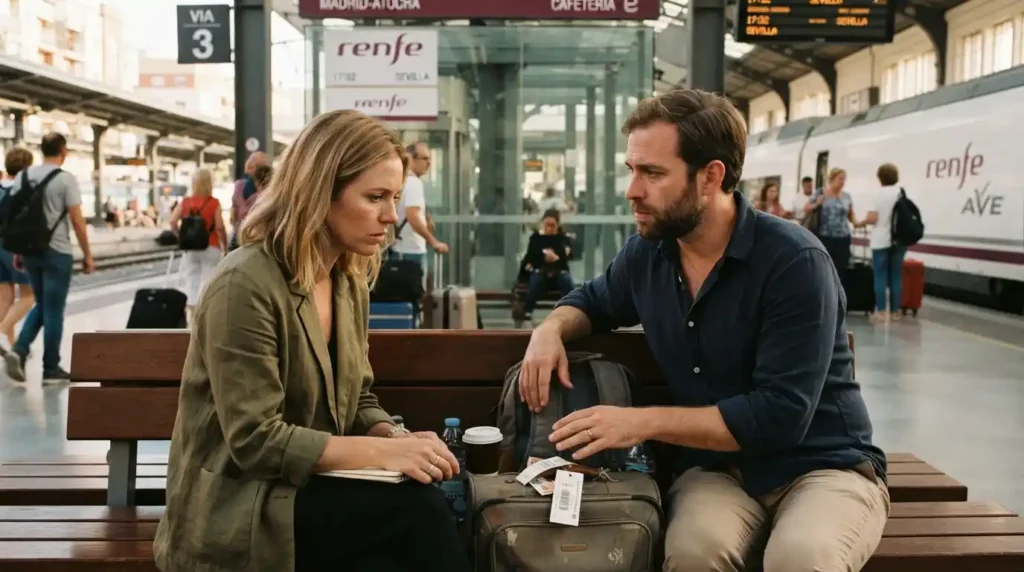
The story follows an American man and a woman named Jig as they wait at a train station in Spain. They are drinking beer and talking while waiting for a train. Their conversation seems simple, but they are really discussing If Jig should have an abortion.
The man wants Jig to have the procedure. He says it is simple and keeps trying to make the decision sound easy. Jig, however, is not convinced. She seems to understand that the decision could change their lives.
The story never directly uses the word abortion. Hemingway leaves the subject hidden inside the dialogue. This is one of the most important features of the story.
The couple also has trouble talking honestly about their feelings. The man says he does not want Jig to do anything she does not want to do, but much of his conversation places pressure on her.
Jig seems to want more than a simple solution. She appears to wonder If they could have a child and build a different life together.
| Story Element | Deeper Meaning |
| The hills | Pregnancy, choice, and different possible futures |
| White elephants | Something difficult, unwanted, or viewed differently |
| The train station | A moment of change or decision |
| The two sides of the valley | Two possible paths |
| Alcohol | Avoidance and emotional escape |
| The conversation | Difficulty communicating honestly |
The story is powerful because Hemingway does not tell readers exactly what to think. Instead, he gives small clues and allows readers to understand the conflict for themselves.
Why Is the Title Hills Like White Elephants Important?
The title is important because it introduces one of the story’s biggest symbols before the main conflict becomes clear.
Jig looks at the hills and says they look like white elephants. The American man does not seem to understand why she says this. He responds that he has never seen one.
This small exchange tells us something about their relationship. Jig sees meaning in the world around her, while the man tends to look at things in a more direct and practical way.
The title also connects to the old expression white elephant. A white elephant can mean something that is unusual, costly, troublesome, or difficult to deal with.
This idea fits the couple’s situation, although readers should be careful not to assume that the hills have only one meaning. The symbol can suggest several things at once.
The hills may represent the pregnancy. They may also represent the choice between two different futures. Hemingway keeps the meaning open rather than giving readers one simple answer.
What Does the White Elephant Symbolize?
The white elephant is one of the best-known symbols in the story.
A white elephant can represent something that is difficult to ignore. It may also describe something that creates a burden or causes trouble.
For the American man, the pregnancy seems to be a problem that needs to be solved. He repeatedly tells Jig that the procedure is simple and that afterward everything will return to normal.
Jig does not seem to see the situation in the same way.
She thinks about what their life could become. At one point, she imagines having a baby and living a more settled life. This suggests that the pregnancy may not be simply a burden to her.
The white elephant therefore has more than one possible meaning.
| Symbol | Possible Meaning |
| White elephant | A difficult or unwanted problem |
| Hills | Pregnancy and possible futures |
| Valley | Life and fertility |
| Train | Change and movement |
| Station | A temporary place before a major decision |
The important point is that symbols in literature can have several meanings. The white elephant does not need to represent only one idea.
What Do the Hills Represent?
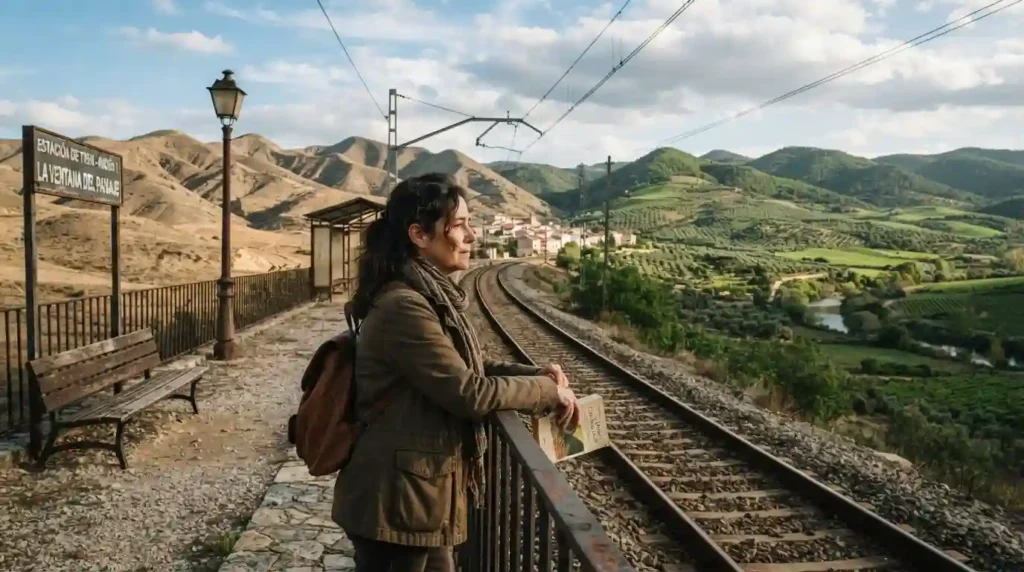
The hills are important because Jig describes them as looking like white elephants, but they may also represent different choices and futures.
The landscape has two sides. One side is dry and barren, while the other side has fields, trees, and a river. This contrast can be connected to the couple’s situation.
One possible future involves having the abortion and continuing their current lifestyle. Another possible future involves having a child and changing their lives.
The story does not clearly say which future Jig will choose. Instead, Hemingway gives readers a landscape that can reflect the uncertainty inside the couple’s conversation.
The hills can also represent something beautiful that is difficult to understand. Jig seems drawn to them, while the American man does not show the same interest.
This difference helps reveal how far apart the two characters may be emotionally.
What Does the Train Station Symbolize?
The train station is another important symbol.
The couple is not at home. They are waiting between destinations. This makes the station a natural symbol for a turning point.
They are literally waiting for a train, but they are also waiting to decide what happens next in their lives.
The station has two directions. The train can take them somewhere new, which fits the story’s focus on change and choice.
The temporary setting also shows that the couple’s future is uncertain. They have not yet made their final decision.
In simple terms, the train station represents a moment when the characters must choose which direction their lives will take.
Why Does Hemingway Never Say Abortion?
Hemingway is famous for his simple writing style and his use of understatement. In this story, he avoids directly naming the procedure.
Instead, the American man calls it an operation.
This makes the conversation feel tense and indirect. Readers have to understand what the characters mean from their words, actions, and reactions.
The hidden subject also shows how difficult it is for the couple to discuss the issue honestly.
The man tries to make the operation sound easy. Jig asks questions and expresses uncertainty. Their conversation circles around the real issue rather than facing it directly.
This technique is connected to Hemingway’s Iceberg Theory, in which much of the meaning is left beneath the surface. The writer gives readers only part of the information and expects them to understand the deeper story.
What Does Jig Represent?
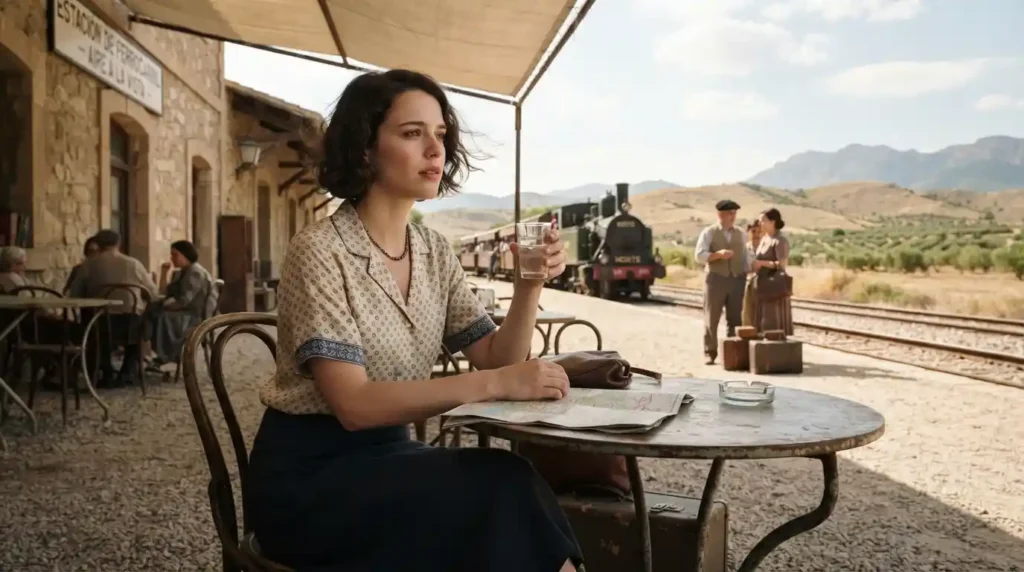
Jig is the woman in the story, and much of the emotional conflict comes through her words.
She seems uncertain about the abortion. At times, she talks about what life could be like if they had a child. She also seems tired of their current lifestyle.
Jig’s comments suggest that she may want a deeper and more stable relationship.
Her name is also interesting. Jig is a word connected to a lively dance. The name may fit the story’s themes of movement, travel, and change, although Hemingway does not explain the name’s meaning.
Jig is not simply presented as someone making a medical choice. She is also thinking about love, family, freedom, and the future.
Her conflict makes the story about more than one decision. It becomes a story about what each person wants from life.
What Does the American Man Represent?
The American man is often called simply the American. Hemingway does not give him a personal name.
He wants Jig to have the abortion, although he repeatedly says the choice is hers.
His language creates tension because he tries to sound calm and reasonable. He says that he will support her decision, but he also makes it clear that he wants the procedure.
This creates a gap between his words and the pressure Jig feels.
The American also seems interested in keeping their current lifestyle. They travel, drink, and move from place to place. A child would likely bring major changes to that lifestyle.
His character therefore represents one side of the conflict: avoiding major change and trying to return to the life they already know.
How Does the Couple Communicate?
Communication is one of the biggest themes in Hills Like White Elephants.
The couple talks constantly, but they do not truly communicate.
They use short sentences. They change subjects. They repeat themselves. They often say things that have a meaning underneath the words.
For example, the man says he wants Jig to be happy. Jig, however, seems to question If he really means that.
Their problem is not a lack of words. It is a lack of honest emotional communication.
| Communication Feature | What It Shows |
| Short dialogue | Emotional distance |
| Repeated phrases | Pressure and uncertainty |
| Indirect language | Difficulty discussing abortion |
| Changes in topic | Avoidance |
| Questions | Jig’s uncertainty |
| Reassurance | The man’s attempt to reduce conflict |
This is why the dialogue is so important. Hemingway makes readers study what the characters say and what they avoid saying.
What Is the Meaning of the Two Sides of the Landscape?
The landscape around the station has two very different sides.
One side is described as dry and empty. The other side has trees, fields, and water.
This contrast can be read as a symbol of two possible paths.
The dry landscape may suggest emptiness, while the fertile side may suggest growth and new life. However, Hemingway does not directly say that one side represents abortion and the other represents childbirth.
That is an interpretation based on the story’s imagery.
The contrast mainly shows that the couple is standing at a point where different futures are possible.
This is also why the landscape matters so much. The physical world around the characters reflects the emotional choices they are facing.
Why Is the Story’s Ending Important?
The ending is deliberately uncertain.
Jig tells the American that she feels fine and asks him to stop talking about the issue. She says there is nothing wrong with her.
The ending does not tell readers If she has agreed to the abortion or changed her mind.
This uncertainty is intentional.
Hemingway does not give the reader a final answer because the story is more interested in the conflict than in a clear result.
The ending also makes readers think about If the couple has truly solved anything. Jig may be trying to end the argument rather than expressing complete peace.
This is another example of Hemingway leaving important information beneath the surface.
Common Mistakes When Explaining Hills Like White Elephants
One common mistake is saying that the story is only about abortion. Abortion is central to the plot, but the story also explores relationships, communication, choice, pressure, travel, and different ideas about the future.
Another mistake is saying that every symbol has one fixed meaning. Hemingway’s symbols are intentionally open to interpretation.
It is also a mistake to assume that the American is completely honest simply because he says the decision is Jig’s. His repeated requests and arguments can be read as pressure, even though he says he wants her to choose freely.
Finally, readers should not assume that the ending gives a definite answer. Hemingway leaves Jig’s final decision unclear.
Why Is Hills Like White Elephants Still Studied?
The story remains important because it shows how much meaning can exist in a very short conversation.
Hemingway uses simple words, but the ideas underneath those words are complex.
The story also demonstrates how writers can discuss difficult subjects without naming them directly. Readers learn to pay attention to symbols, setting, dialogue, silence, and repeated phrases.
For students, the story is especially useful because it shows how literary meaning can come from what characters do not say.
It also raises questions that remain relevant to many readers: How should couples make major choices? What happens when two people want different futures? Can a relationship survive when one person feels pressured?
FAQs
What is the main meaning of Hills Like White Elephants?
The story is mainly about a couple facing a difficult decision about abortion. It also explores communication, pressure, love, and different ideas about the future.
Why are the hills called white elephants?
Jig says the hills look like white elephants because of their shape. The phrase also connects to the idea of something difficult or troublesome, which can relate to the couple’s pregnancy and decision.
What does the train station symbolize?
The train station can symbolize a turning point. The couple is waiting between destinations while deciding what direction their lives may take.
What does the American want Jig to do?
The American wants Jig to have an abortion. He describes the procedure as simple and repeatedly encourages her to have it, while also saying the decision is hers.
Does Jig have the abortion at the end?
The story does not give a definite answer. The ending is intentionally unclear, so readers cannot know for certain what Jig finally decides.
What is Hemingway’s Iceberg Theory in this story?
The Iceberg Theory means that a writer may leave much of a story’s meaning unstated. In Hills Like White Elephants, Hemingway does not directly explain the abortion, the couple’s deepest feelings, or the final decision. Readers must discover these meanings through clues.
Conclusion
The hills like white elephants meaning becomes clearer when you look beyond the literal landscape.
Hemingway uses the hills, the train station, the valley, and the couple’s quiet conversation to explore a difficult choice about abortion and the future of a relationship.
The hills can represent different possibilities, while the white elephant suggests something difficult that cannot easily be ignored.
The story’s greatest strength is its use of simple language to hide deep conflict beneath the surface. There is no clear final answer about what Jig decides, and that uncertainty is part of the story’s design.
When reading Hemingway, pay close attention not only to what the characters say, but also to what they avoid saying.

Muhammad Haroon is the founder and writer behind Factnora.com, a platform focused on sharing interesting, useful, and reliable information. His work covers biographies, history, facts, and stories that help readers discover something new in a simple and engaging way. Through factnora, Muhammad aims to make learning enjoyable while presenting information in a clear and reader-friendly style.