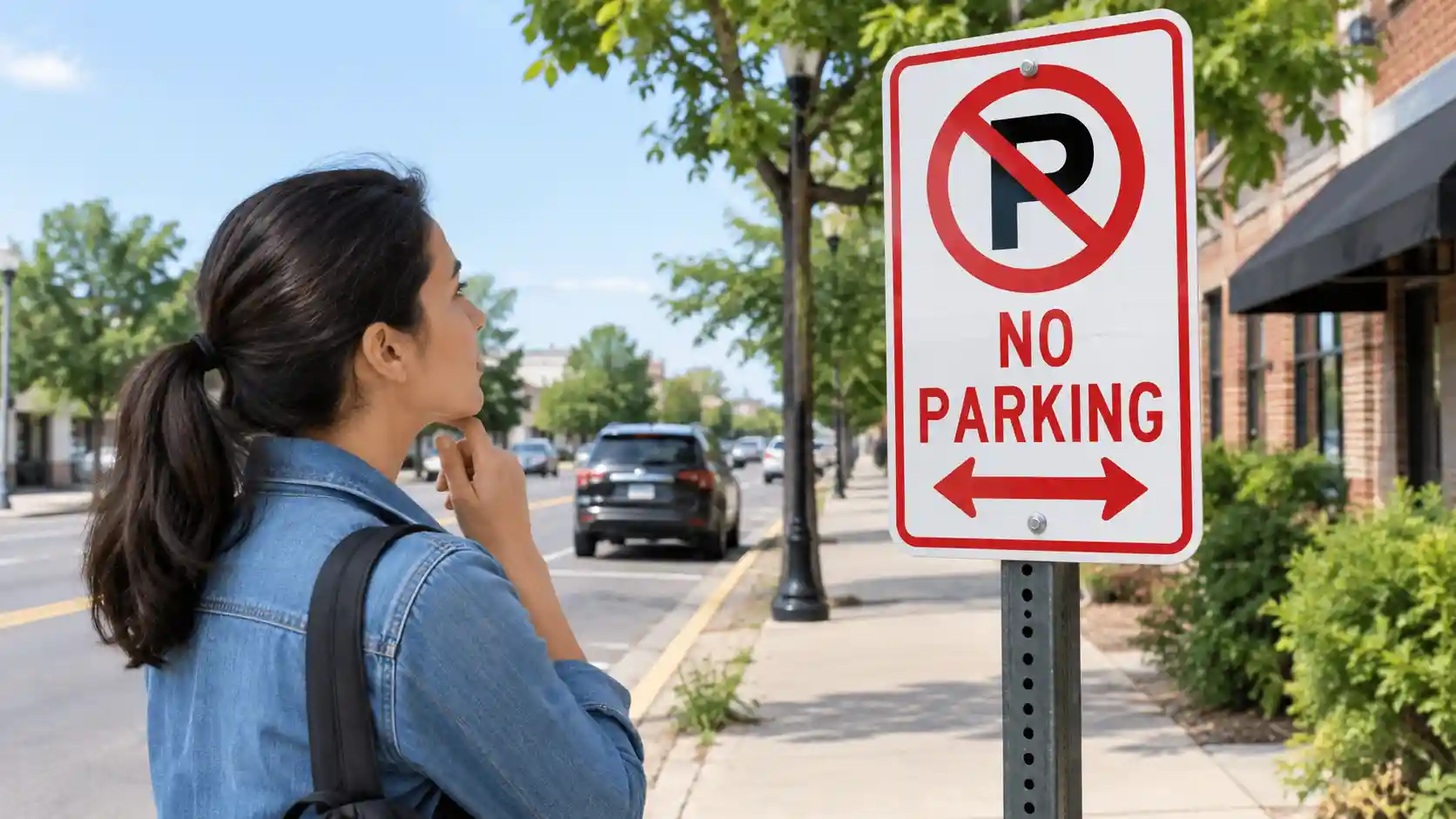
A no parking sign means you are not allowed to leave your vehicle parked in the area marked by the sign.
In many places, you may be allowed to stop briefly to pick up or drop off a passenger, but you cannot leave your car there unattended. The exact rule can vary by city and sign wording.
If you have ever wondered what a red-and-white no parking sign meaning is, you are not alone.
Road signs can look simple, but small words such as No Parking, No Standing, or No Stopping can change what you are legally allowed to do.
You will learn how it differs from other parking signs, what common symbols mean, where these signs are found, and what can happen if you ignore them.
Quick Answer: What Does a No Parking Sign Mean?
The no parking sign meaning is simple: you cannot park your vehicle in the area covered by the sign.
Parking generally means leaving a vehicle stopped while you are not actively dealing with passengers or traffic. A typical no parking sign may still allow you to stop briefly to pick up or drop off someone, depending on local traffic laws.
For example, if you see a sign that says NO PARKING, you should not leave your car there while you go into a store.
The important point is that traffic signs and parking laws can differ between states, cities, and countries. Always read the full sign and look for extra words, arrows, hours, or days.
No Parking Sign Meaning in Simple Words
Think of a no parking sign as a warning that says:
Do not leave your vehicle parked here.
The sign is often placed where a parked vehicle could block traffic, pedestrians, emergency vehicles, driveways, or other road users.
A no parking sign does not always mean that a vehicle can never stop there. The exact meaning depends on the wording and local law.
For example, these situations can be different:
| Situation | Usually allowed under a basic No Parking rule? |
| Leaving your car while you go shopping | No |
| Leaving your car while you visit a friend | No |
| Briefly picking up a passenger | Often, but local rules apply |
| Briefly dropping off a passenger | Often, but local rules apply |
| Stopping because of traffic | Usually treated differently |
| Stopping where another sign says No Stopping | No |
These are general explanations, not a substitute for the parking rules in your local area.
What Does a No Parking Sign Look Like?
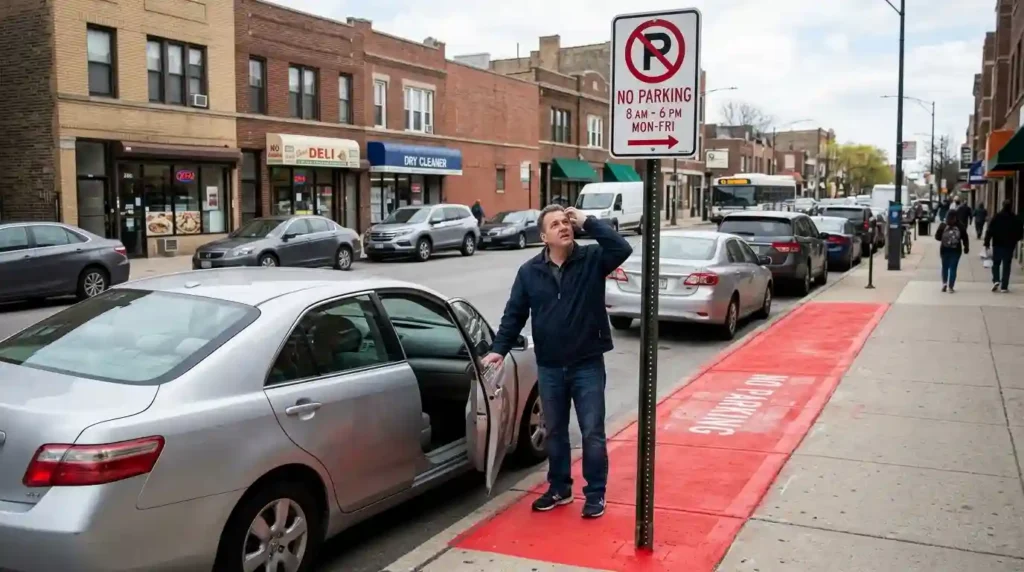
A no parking sign often uses strong colors and simple words so drivers can understand it quickly.
In the United States, parking signs commonly use red lettering, symbols, or borders to show restrictions. However, the design is not exactly the same everywhere.
A sign may include words such as:
NO PARKING
NO PARKING 8 AM–6 PM
Some signs also have arrows showing where the restriction begins or ends.
For example, an arrow pointing left may mean the parking restriction applies in that direction. An arrow pointing right may show the same thing on the other side.
Always read the entire sign instead of looking only at the large words.
No Parking vs. No Standing vs. No Stopping
One of the biggest sources of confusion is the difference between no parking, no standing, and no stopping.
They may sound similar, but they can describe different restrictions.
| Sign wording | General idea |
| No Parking | You cannot leave your vehicle parked there. |
| No Standing | Stopping may be limited, with only certain brief passenger-related activity allowed under local rules. |
| No Stopping | You generally cannot stop there except for situations allowed by law, such as avoiding a traffic conflict. |
The exact legal definitions can vary by jurisdiction.
A useful way to remember the basic idea is:
No parking = do not leave your car there.
No stopping = stopping is usually even more restricted.
Because these terms have legal meanings, check your local traffic code if you need to know exactly what is allowed.
Where Are No Parking Signs Usually Found?
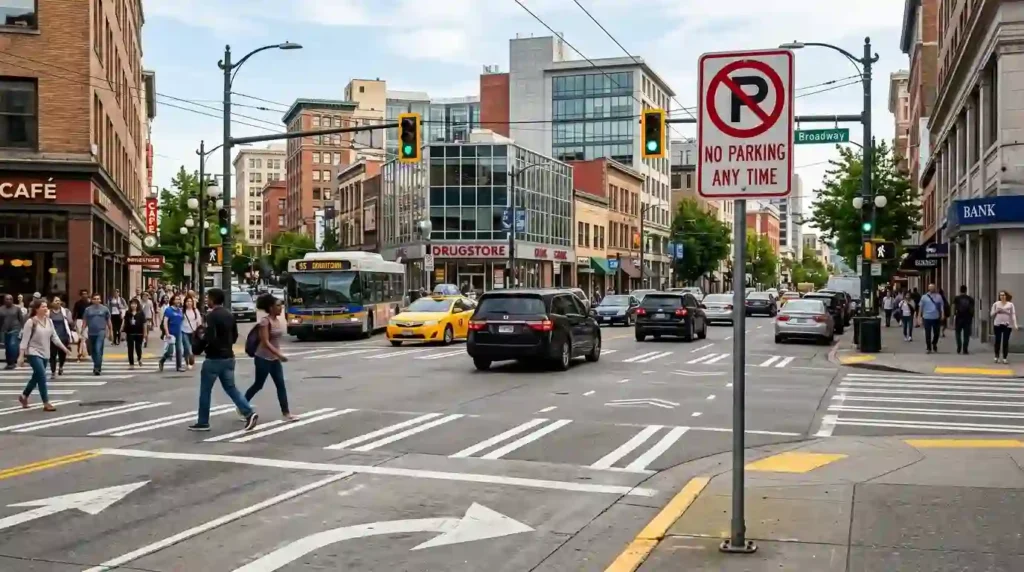
No parking signs are commonly placed in areas where parked vehicles could cause a problem.
You may see them near fire hydrants, intersections, bus stops, loading areas, driveways, narrow roads, schools, or emergency access points.
They can also appear near construction areas or temporary traffic-control zones.
For example, imagine a narrow street with a busy intersection. If several cars park beside the corner, drivers may have trouble seeing approaching traffic. A no parking restriction can help keep that area clear.
Another common example is an emergency access area. Fire trucks and ambulances need enough room to reach buildings quickly. Parking in a restricted zone could make that difficult.
The reason for a sign is often connected to safety, traffic flow, access, or visibility.
How to Read a No Parking Sign Correctly
Reading the words on the sign is only the first step. Look at all the information around them.
Pay attention to the following details.
Time limits: A sign may restrict parking only during certain hours.
Days: Some restrictions apply only on weekdays, weekends, or specific days.
Arrows: Arrows can show the direction or area covered by the restriction.
Exceptions: Words such as Except can create a specific exception.
Additional signs: Several signs may be mounted on the same pole. Read them together.
For example, a sign might say No Parking 7 AM–9 AM with an arrow pointing toward the street. That could mean parking is restricted during those hours in the direction shown.
Never assume that a sign applies to the entire block without checking its arrows and other information.
Common Examples of No Parking Rules
The meaning becomes easier to understand when you see it in everyday situations.
Suppose you drive to a coffee shop and see a no parking sign in front of the building. You cannot leave your vehicle there while you go inside to buy coffee.
Now imagine you are driving along a busy road and see a no parking sign near a curb. You want to pick up a passenger. Depending on local law, a short passenger pickup may be allowed.
Another situation involves delivery drivers. A delivery vehicle may have special rules in some areas, but a no parking sign does not automatically disappear just because the driver is making a delivery.
Here are a few simple examples:
| Example | What you should do |
| No Parking outside a store | Find a legal parking space. |
| No Parking near a driveway | Keep the driveway clear. |
| No Parking during certain hours | Follow the stated hours. |
| No Parking with an arrow | Check which direction the restriction covers. |
| Temporary No Parking sign | Follow the temporary restriction and dates. |
When in doubt, choose a legal parking location rather than assuming an exception applies.
Why Do Cities Use No Parking Signs?
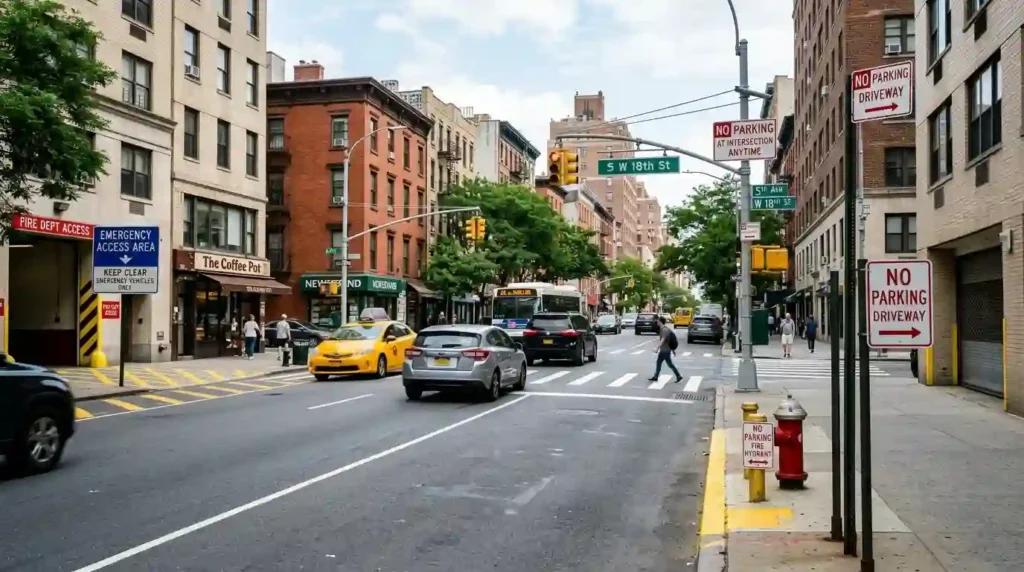
Cities use parking restrictions for many practical reasons.
One reason is traffic safety. Parked cars can reduce visibility near corners, crossings, and intersections.
Another reason is traffic movement. A parked vehicle can narrow a lane and make it harder for cars, buses, bicycles, or emergency vehicles to pass.
No parking areas can also protect access to driveways, loading zones, fire equipment, and public transportation stops.
Temporary signs can be used for road work, special events, construction, street cleaning, or other activities.
The purpose is not always obvious to the driver. A restriction may exist because of a problem that is more visible to traffic engineers, emergency workers, businesses, or people who use the road regularly.
What Happens If You Park Under a No Parking Sign?
The consequences depend on local law.
A driver who parks in a restricted area may receive a parking ticket. In some situations, the vehicle may also be towed.
The amount of a parking fine can vary widely between cities and violations. Some areas have higher penalties for parking in places that create safety or access problems.
For this reason, do not assume that a small sign means a small penalty.
If you receive a ticket, the ticket itself should provide information about the violation, payment process, and any available appeal process.
Common Mistakes Drivers Make
Many parking problems happen because drivers read only part of a sign.
One common mistake is seeing No Parking and assuming that stopping for any reason is forbidden. A basic no parking rule and a no stopping rule are not necessarily the same.
Another mistake is ignoring the hours listed on the sign. A restriction may apply only during certain periods.
Drivers also sometimes miss arrows. An arrow can show whether the restriction applies to the area before or after the sign.
Another mistake is assuming that a quick stop is always legal. Local laws may define stopping, standing, and parking differently.
The safest habit is simple: read every word and symbol before leaving your vehicle.
Tips for Avoiding Parking Tickets
You can reduce parking mistakes by making a few simple habits part of your normal driving routine.
First, look for signs before you leave your vehicle. Do not wait until after you have parked to check.
Second, check both the main sign and any smaller signs below it.
Third, look for arrows and time restrictions.
Fourth, check the curb and surrounding area for other parking rules.
Finally, if you are unsure, use a marked legal parking space or a parking facility.
A few extra seconds spent reading a sign can prevent a ticket, towing problem, or traffic hazard.
Does No Parking Mean You Cannot Stop?
Not always.
This is one of the most important details about the no parking sign meaning.
In many jurisdictions, parking, standing, and stopping are separate legal concepts. A basic no parking restriction may still allow a brief stop for certain passenger-related activities.
However, this does not mean you can stop whenever you want.
If a sign says No Stopping, the restriction is generally stronger. Local traffic laws determine what exceptions exist.
You should also remember that traffic conditions matter. A driver may be required to stop because of a red light, another vehicle, a pedestrian, or an emergency. Those situations are different from voluntarily choosing to park.
Are No Parking Signs the Same Everywhere?
No.
The general idea is similar, but the exact sign design, wording, colors, and legal definitions can vary.
In the United States, individual states and local governments can have their own traffic regulations. Some cities also use different signs for different types of restrictions.
This is why an online explanation should be treated as general information rather than a replacement for local law.
If you are dealing with a ticket, towing issue, or disputed parking restriction, check the traffic or parking rules for the specific city or state.
Frequently Asked Questions
What does a no parking sign mean?
A no parking sign generally means you cannot leave your vehicle parked in the restricted area. Depending on local law, brief passenger pickup or drop-off may still be allowed.
Can I stop at a no parking sign?
Sometimes. A basic no parking rule may allow certain brief stops, but the exact rule depends on local law and any additional signs. A No Stopping sign is generally more restrictive.
Can I wait in my car under a no parking sign?
It depends on local parking laws and what the sign says. Simply sitting in your vehicle does not automatically make parking legal.
Can I park for just five minutes?
A short amount of time does not automatically make parking legal. If parking is prohibited, even a brief period may result in a ticket depending on local rules.
What do arrows on a no parking sign mean?
Arrows usually help show the direction or section of roadway covered by the parking restriction. Read the sign and nearby signs together.
What should I do if I am unsure about a no parking sign?
If you cannot clearly understand the restriction, look for additional signs or check the local parking authority’s rules. The safest option is to park in a clearly legal space.
Conclusion
The no parking sign meaning is usually straightforward: do not leave your vehicle parked in the area covered by the sign.
However, the exact rules can change depending on the wording, arrows, times, exceptions, and local traffic laws.
A no parking sign is also different from no standing and no stopping signs. That difference matters because each restriction can place different limits on what drivers may do.
Before leaving your car, read the complete sign and check any nearby signs. Pay attention to hours, days, arrows, and exceptions.
If you are unsure, choose a clearly legal parking area. A few seconds of careful reading can help you avoid a ticket and keep roads, sidewalks, driveways, and emergency areas clear.

Muhammad Haroon is the founder and writer behind Factnora.com, a platform focused on sharing interesting, useful, and reliable information. His work covers biographies, history, facts, and stories that help readers discover something new in a simple and engaging way. Through factnora, Muhammad aims to make learning enjoyable while presenting information in a clear and reader-friendly style.