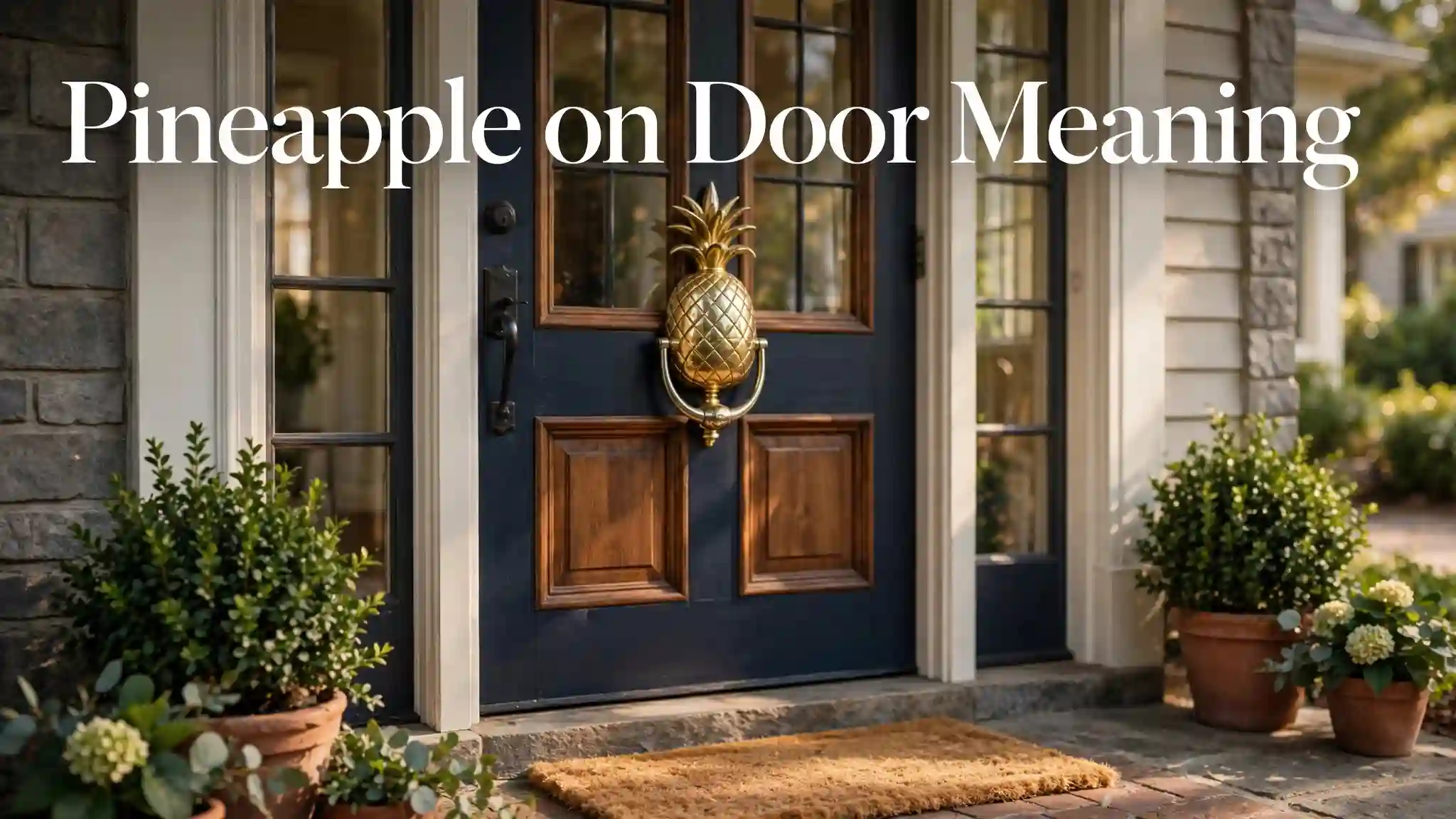
A pineapple on a door means welcome. It is a friendly sign that tells visitors they are wanted, valued, and safe.
When people search for pineapple on door meaning, they usually saw one on a neighbor’s door, a hotel entrance, or an old house and felt curious. The short answer is simple, but the story behind it is rich.
This guide explains the meaning in plain words. You will learn why the pineapple became a symbol of welcome, how sea captains and innkeepers used it, where you still see it today, and what it does not mean. By the end, you will know exactly what message a pineapple sends.
Quick Answer
A pineapple on a door is a traditional symbol of hospitality. It says, “Come in. You are welcome here.” The custom began in colonial America, when pineapples were rare and costly. Hosts used the fruit to honor guests. Later, people carved the shape into door knockers, gates, and furniture. Today, the same symbol still means warmth, kindness, and good cheer.
Pineapple on Door Meaning
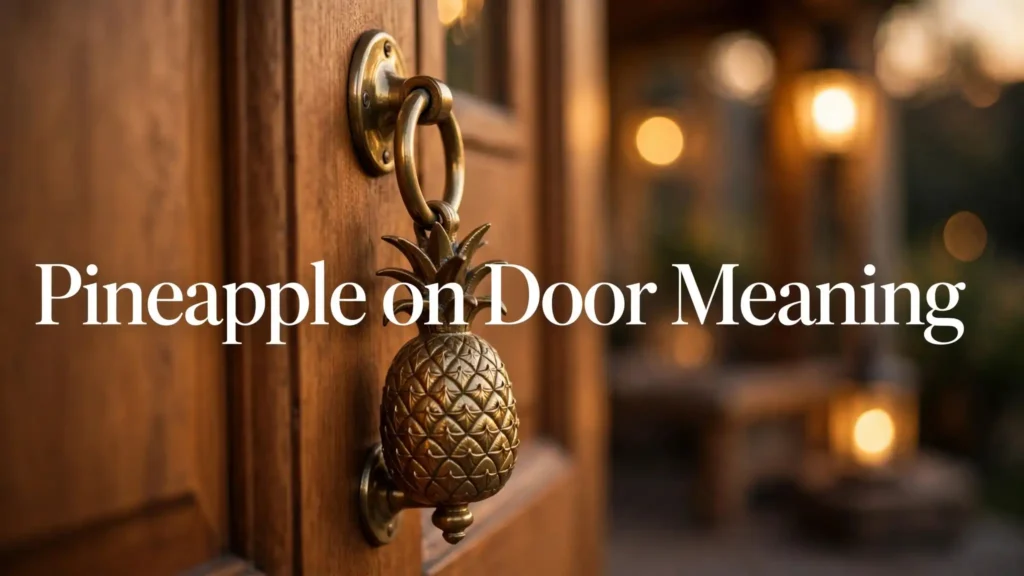
The pineapple on door meaning is hospitality. A pineapple near an entrance tells guests that the home is open and the host is generous. It is not just decoration. It carries a message that has lasted for hundreds of years.
Long ago, fresh pineapples were hard to find in America. They came from far away and spoiled quickly on ships. Only wealthy families could buy them. When a host served pineapple, it showed deep respect. The fruit said, “You matter so much that I shared my best with you.”
Over time, people wanted that welcome to last. They carved pineapples into wood and stone. They placed them on gateposts, above doors, and on furniture. The fresh fruit could rot, but the carved symbol stayed. That is how the pineapple became a lasting sign of welcome.
| What It Means | The Message for Visitors |
|---|---|
| Welcome | You are invited in. |
| Hospitality | You will be treated with care. |
| Generosity | The host shares the best. |
| Friendship | Your visit is valued. |
| Warmth | This is a kind home. |
Why a Pineapple Became a Welcome Sign
The pineapple did not start as a decoration. It started as a rare treat. Pineapples grow in warm places, far from colonial America. Getting one across the ocean was slow and risky. Many fruits rotted before arrival. A fresh one was precious.
Because it was rare, the pineapple became special. A hostess might place one at the center of the table during an important dinner. Guests knew at once that they were honored. Some old stories say rich families even displayed pineapples they did not plan to eat, just to show respect.
This link between pineapple and honor slowly turned into a wider idea. The fruit stood for sharing, kindness, and good hosting. People began to use its shape as a short way to say, “We welcome guests.” The meaning was clear even without words.
This is why the pineapple still feels warm today. It reminds people of shared meals, safe returns, and open doors. The fruit may now be common, but the feeling behind it has not faded.
The Sea Captain Story

One famous story comes from New England sea captains. These captains sailed to warm islands and returned with goods. Sometimes they brought pineapples home. When a captain came back safely, he might place a pineapple on his gatepost or near his door.
The fruit sent two messages. First, it told neighbors that the captain had returned safely from a long voyage. Second, it invited friends to visit, share food, and hear stories from the sea. It was an open door in fruit form.
Innkeepers liked the idea. They carved wooden pineapples and fixed them above their doors. Travelers learned the sign quickly. A pineapple meant a friendly place to rest. From inns, the custom moved into homes. Soon pineapples appeared on door knockers, stair rails, and garden gates.
Where You See It Today
The tradition never died. In historic towns, pineapples still decorate many entrances. Charleston, South Carolina is well known for pineapple door knockers and gate designs. Hotels and bed-and-breakfasts use the symbol to promise comfort.
You may also see it in modern homes. A pineapple wreath can hang on a front door during holidays. A small pineapple sign may sit near a porch. In each case, the message stays friendly.
| Decoration | Where You See It | What It Says |
|---|---|---|
| Pineapple door knocker | Old homes and front doors | Classic welcome |
| Pineapple wreath | Doors in holiday season | Warm celebration |
| Carved pineapple | Gateposts and stairs | Lasting hospitality |
| Pineapple mat | Porch or doorstep | Casual friendly hello |
| Pineapple wall sign | Entryway or porch | Cheerful invitation |
Even when the style is modern, the meaning is old. The pineapple still tells guests that they will be treated well. Some families even pass the custom down, choosing the same knocker for a new home.
What It Does Not Mean
Most pineapple decorations mean welcome. But the internet has added confusion. Some posts say an upside-down pineapple can signal a swinger lifestyle. That idea comes from modern online culture, not from the old tradition.
It is important to separate the two. A normal, upright pineapple on a door, gate, or porch almost always means hospitality. Do not assume a secret meaning. Context matters. A pineapple door knocker in a historic neighborhood is not a code. It is good manners.
If you are unsure, trust tradition. Unless the owner explains another meaning, read the pineapple as a warm hello. Jumping to the wrong idea can embarrass you and insult a kind host.
Common Mistakes
One mistake is thinking the pineapple is only pretty. It is beautiful, but on a door it has a job. It speaks for the host before anyone knocks.
Another mistake is reading too much into it. Most people choose pineapple decor because they like the look or the tradition. They are not sending hidden signals.
People also mix up upright and upside-down pineapples. The old welcome sign stands upright. The upside-down version belongs to a different, modern internet idea. They should not be treated as the same.
A final mistake is thinking it still means wealth. Centuries ago, it did show riches. Today, pineapples are common in stores. The modern meaning is about warmth, not money.
It also helps to notice place and style. In historic areas, pineapple decor is often about local pride. On a modern porch, it may simply be cheerful style. Look at the whole setting before you judge the meaning.
Real-Life Examples
Imagine walking up to a friend’s house. There is a brass pineapple knocker on the door. Your friend picked it because it looks warm and classic. Before you knock, the pineapple has already said hello.
Picture a small inn on a quiet street. A pineapple wreath hangs on the door, and carved pineapples stand on the gateposts. The owners want travelers to feel invited. The decorations do that work day and night.
Think of a hotel lobby with a pineapple sculpture near the entrance. The hotel is telling guests, “We are glad you came.” It is the same welcome those old sea captains offered, only now it is made of brass or wood.
A new neighbor might hang a pineapple sign to say they are friendly. A restaurant might carve one near the door to promise good service. In every case, the shape does the talking.
FAQs
What does a pineapple on a door mean?
It means welcome and hospitality. The host is telling visitors that they are invited in and will be treated with kindness.
Why is the pineapple linked to hospitality?
In colonial America, pineapples were rare and expensive. Serving one honored guests. Sea captains and innkeepers later used the fruit as a public welcome sign.
Is the pineapple a religious symbol?
No. It is a cultural symbol of welcome. People from many backgrounds use it to show friendship and good hosting.
What does an upside-down pineapple mean?
Online culture sometimes links it to the swinger lifestyle. That is a modern idea, not the traditional meaning. An upright pineapple means hospitality.
Where did the door tradition start?
It grew in colonial America, especially in New England. Sea captains placed pineapples near doors after safe voyages, and innkeepers copied the custom.
Should I put a pineapple on my door?
Yes, if you like the tradition. A wreath, knocker, or sign is a lovely way to welcome guests. Just remember the message: your home is open and friendly.
Conclusion
The pineapple on door meaning is one of the kindest traditions in American homes. A pineapple at the entrance says welcome, generosity, and warmth without speaking.
It began when the fruit was rare, and hosts used it to honor guests. Sea captains, innkeepers, and homeowners kept the custom alive by carving it into doors, gates, and furniture.
Today, the symbol still works. A pineapple knocker, wreath, or carving tells every visitor that they matter. So when you see one, smile. You are looking at centuries of welcome, and that is a tradition worth keeping.

Ali Sher is a writer and the creator of Factnora.com, a website dedicated to sharing fascinating facts, biographies, history, and useful knowledge. He enjoys researching interesting topics and turning them into simple, engaging stories for readers. Through factnora, Muhammad aims to provide informative content that is easy to understand, enjoyable to read, and worth sharing.