
The with or without prejudice meaning can be confusing because these words have a special legal meaning that is different from everyday English. The exact effect depends on the court order, the type of case, and the situation.
You may see these terms in court papers, settlement agreements, legal letters, or case records. Understanding them can help you know If a legal matter is finished or If another legal action may still be possible.
This guide explains the meaning of with prejudice and without prejudice, how they are used, the key differences, common mistakes, and simple examples.
Quick Answer
The simplest with or without prejudice meaning is this: with prejudice usually means a legal claim is dismissed permanently, while without prejudice usually means the claim is dismissed but may be filed again.
For example, if a judge dismisses a lawsuit with prejudice, the plaintiff generally cannot bring the same claim against the same defendant again. If the judge dismisses it without prejudice, the plaintiff may be able to correct the problem and file the case again.
However, “without prejudice” does not always mean a person can automatically restart a case. Filing deadlines, court rules, previous judgments, and other legal limits may still apply.
| Term | Simple meaning | Can the claim usually be filed again? |
| With prejudice | The matter is generally final | No |
| Without prejudice | The matter may not be final | Sometimes |
| Dismissed with prejudice | Claim is usually permanently dismissed | Generally no |
| Dismissed without prejudice | Claim may be dismissed without a final decision on the claim | Possibly |
What Does With Prejudice Mean?
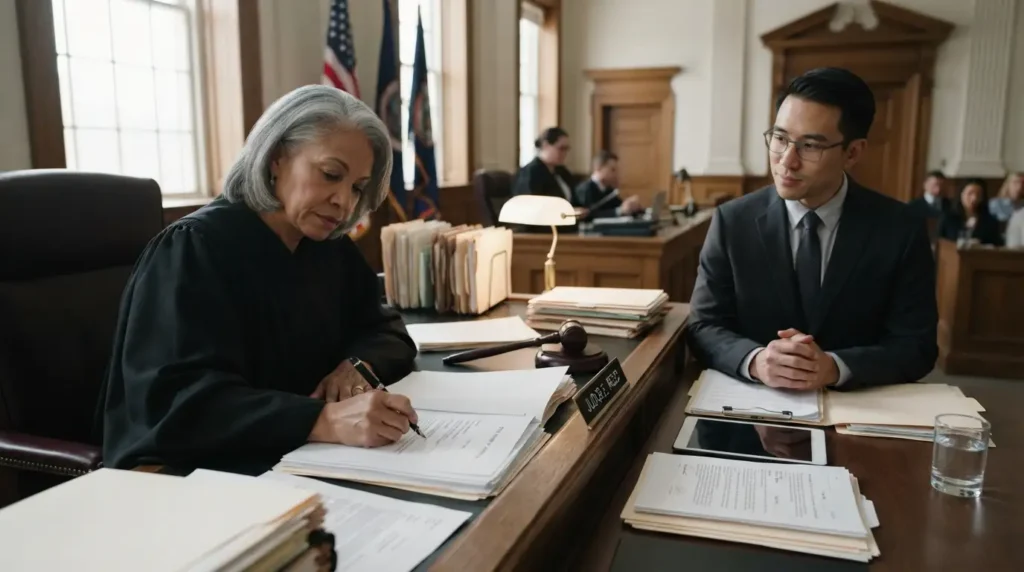
In legal language, with prejudice usually means that a claim or case has been ended in a way that prevents the same claim from being brought again.
Imagine that someone files a lawsuit against another person. The court later dismisses the lawsuit with prejudice. In most situations, the plaintiff cannot simply file the same lawsuit again and start over.
The word “prejudice” here does not mean unfair treatment or personal bias. Instead, it refers to the legal effect of the decision on a person’s ability to bring the claim again.
A dismissal with prejudice is therefore generally a final result for that particular claim.
For example, suppose Maria sues John over a contract dispute. The court dismisses Maria’s claim with prejudice. Maria generally cannot dismiss the case one day and then file the same contract claim again simply because she wants another chance.
That does not necessarily mean Maria can never bring any lawsuit against John for any reason. The effect normally applies to the claim or claims covered by the order.
What Does Without Prejudice Mean?
Without prejudice generally means that a legal claim is ended without preventing the person from bringing the claim again, when the law permits it.
For example, a plaintiff might file a lawsuit but discover that an important procedural requirement was not met. The court could dismiss the case without prejudice. The plaintiff may then be able to fix the problem and file the case again.
This can be helpful when a case has a technical or procedural problem rather than a final decision about who is legally right.
However, “without prejudice” is not a guarantee that the person can file again. A statute of limitations may have expired. A new filing may also face other procedural requirements or legal defenses.
So, when reading a court order, do not look only at the words “without prejudice.” Check the entire order and any applicable deadlines.
With Prejudice vs. Without Prejudice
The biggest difference is finality.
A dismissal with prejudice generally prevents the same claim from being brought again. A dismissal without prejudice generally leaves open the possibility of another case.
| Feature | With Prejudice | Without Prejudice |
| Basic effect | Usually final | Usually not final |
| Same claim filed again | Generally barred | May be possible |
| Can a problem be corrected? | Usually not by simply refiling | Often, depending on the reason for dismissal |
| Does it decide every future dispute? | No | No |
| Does it always end all legal rights? | Not necessarily | No |
| Should you check the court order? | Yes | Yes |
A simple way to remember the difference is:
With prejudice = usually final.
Without prejudice = usually leaves the door open.
These are general explanations, not guarantees about a particular case. The wording of the court’s order and the applicable law control the result.
Why Do Courts Dismiss Cases Without Prejudice?

There are many reasons a court may dismiss a case without prejudice. One common reason is a procedural problem that does not necessarily mean the underlying claim has no legal merit.
For example, a plaintiff may fail to follow a required court procedure. A case could also be dismissed because the court does not have jurisdiction or because a filing does not meet certain requirements.
In some situations, the court may give the plaintiff a chance to correct the problem. If that happens depends on the facts, the applicable rules, and the judge’s order.
The important point is that a dismissal without prejudice generally does not have the same final effect as a dismissal with prejudice.
Why Would a Case Be Dismissed With Prejudice?
A court may dismiss a case with prejudice when it determines that the claim should not be brought again.
This can happen in different legal situations. For example, a court may reach a final decision that prevents the same claim from being relitigated. A case may also be dismissed with prejudice as part of a settlement or because of serious procedural problems, depending on the circumstances and applicable rules.
In federal civil cases, Federal Rule of Civil Procedure 41 contains important rules about dismissals. The exact effect of a dismissal depends on how the dismissal occurs and what the court order says.
This is why the phrase should not be treated as a simple label without looking at the surrounding legal document.
How Is “Without Prejudice” Used in Settlement Talks?
The phrase without prejudice can also appear in settlement discussions and legal correspondence.
In this setting, the phrase may signal that a communication is part of an attempt to settle a disputed matter and should not necessarily be treated as an admission or final statement of a party’s position.
For example, a lawyer might send a settlement proposal marked “without prejudice.” The lawyer may be trying to negotiate rather than make a final admission about the client’s legal position.
But there is an important point: putting the words “without prejudice” on a letter does not automatically give the communication special legal protection in every situation.
In the United States, evidence rules such as Federal Rule of Evidence 408 address certain offers and statements made during compromise negotiations. If a communication is protected depends on the circumstances and the applicable law.
So, “without prejudice” in a settlement letter and “without prejudice” in a court dismissal are related phrases, but they do not always perform the same legal function.
Real-Life Examples of With or Without Prejudice
Here are some simple examples to make the difference easier to understand.
Example 1: Dismissal with prejudice
A person files a lawsuit over a dispute. The court dismisses the claim with prejudice. The plaintiff generally cannot file the same claim again.
Example 2: Dismissal without prejudice
A plaintiff files a case but fails to meet a procedural requirement. The court dismisses the case without prejudice. If the law and filing deadlines allow it, the plaintiff may be able to correct the problem and file again.
Example 3: Settlement discussion
A lawyer sends a letter proposing a settlement and marks it “without prejudice.” The lawyer is communicating as part of negotiations. The label may help show the nature of the communication, but its legal effect depends on the applicable rules and circumstances.
Example 4: Voluntary dismissal
A plaintiff decides to end a lawsuit. Depending on the applicable rules and the history of earlier dismissals, the dismissal may be with or without prejudice.
These examples show why the surrounding facts matter.
Common Mistakes About the Meaning

One common mistake is thinking that prejudice means discrimination or unfair treatment. In everyday English, that is often what “prejudice” means. In legal phrases such as “dismissed with prejudice,” the meaning is different.
Another mistake is assuming that without prejudice always means you can sue again. That is not necessarily true. A person may still face a statute of limitations, jurisdiction problem, or another legal barrier.
People also sometimes assume that a case dismissed with prejudice means the person has lost every possible legal claim forever. That is too broad. The effect generally concerns the specific claims or issues covered by the legal order.
A final mistake is treating a “without prejudice” label on a settlement letter as a magic shield. Legal protections depend on the facts and applicable evidence rules.
Grammar and Correct Usage
The phrases are usually written as with prejudice and without prejudice.
Common examples include:
“The court dismissed the case with prejudice.”
“The plaintiff voluntarily dismissed the action without prejudice.”
“The parties exchanged offers during settlement negotiations.”
Notice that “with prejudice” and “without prejudice” are usually used as legal phrases rather than as descriptions of a person’s character.
You might also see the terms in phrases such as dismissal with prejudice, dismissal without prejudice, claim dismissed with prejudice, and claim dismissed without prejudice.
When discussing a real legal case, it is best to use the exact wording from the court’s order rather than assume what the judge intended.
Is With Prejudice the Same as Losing a Case?
Not always.
A dismissal with prejudice can have a final effect on a claim, but the reason for the dismissal matters. A case can end for different reasons, and “with prejudice” does not by itself explain the entire history of the dispute.
For example, a case could end through a settlement that includes dismissal with prejudice. In that situation, the parties may have agreed to resolve the dispute rather than having a judge decide every issue after a trial.
The phrase tells you about the legal effect of the dismissal, but you need the full court record or agreement to understand why the case ended.
Does Without Prejudice Mean You Won?
No.
A dismissal without prejudice does not mean the plaintiff won, and it does not mean the defendant lost.
It generally means the particular case ended without creating the same final bar against refiling that a dismissal with prejudice can create.
The underlying dispute may still be unresolved. If the plaintiff files again, the defendant may raise defenses, and the court will still need to apply the relevant law.
British vs. American English
The phrases with prejudice and without prejudice are used in both American and British legal English, but their exact legal operation can differ between legal systems.
This article focuses mainly on U.S. legal usage, because court procedures and evidence rules vary by jurisdiction.
If you are reading a document from another country, do not assume that the phrase has exactly the same legal consequences as it would in a U.S. court.
How to Read a Court Order Carefully
If you see “with prejudice” or “without prejudice” in a court document, read the complete sentence and the rest of the order.
Look for the following information: what claim was dismissed, If the entire case was dismissed, the reason for dismissal, If the court set a deadline, and If the order says anything about refiling.
This matters because a short phrase may not tell you everything about your legal rights.
For example, an order could dismiss one claim while allowing other claims to continue. In another case, the entire lawsuit could be dismissed.
If the document affects an important legal right or deadline, consider asking a licensed attorney to review it.
Frequently Asked Questions
What is the simple meaning of with prejudice?
With prejudice generally means a legal claim is ended in a final way and cannot be brought again. The exact effect depends on the court order and applicable law.
What is the simple meaning of without prejudice?
Without prejudice generally means a claim has been dismissed without creating the same final bar against bringing the claim again. Refilling may still be subject to deadlines and other legal rules.
Can I file a case again if it was dismissed without prejudice?
Possibly. A dismissal without prejudice can allow another filing, but you still must meet all legal requirements. A filing deadline or another legal rule may prevent a new case.
Can a case dismissed with prejudice be reopened?
Sometimes a court may have limited procedures for challenging or changing an order, but a person should not assume that a case can simply be refiled. The applicable court rules and circumstances matter.
Does without prejudice mean the case was unfair?
No. In this legal phrase, “without prejudice” does not mean that the court treated someone unfairly. It generally describes the legal effect of ending a claim.
Does “without prejudice” protect every settlement conversation?
No. The phrase does not automatically protect every communication. In U.S. law, the protection of settlement communications depends on applicable rules and the circumstances of the discussion.
Conclusion
The with or without prejudice meaning is easier to understand when you focus on one key idea: finality.
A dismissal with prejudice generally prevents the same claim from being brought again, while a dismissal without prejudice may allow a new filing if the law permits it.
Still, these phrases should never be read in isolation. The court order, reason for dismissal, filing deadlines, procedural rules, and facts of the case can all affect what happens next.
If you see either phrase in a legal document, read the full document carefully and check what claims or issues it actually covers. When the document affects an important legal right or deadline, getting advice from a qualified attorney is the safest approach.

Muhammad Haroon is the founder and writer behind Factnora.com, a platform focused on sharing interesting, useful, and reliable information. His work covers biographies, history, facts, and stories that help readers discover something new in a simple and engaging way. Through factnora, Muhammad aims to make learning enjoyable while presenting information in a clear and reader-friendly style.