Have you ever focused so much on small details that you forgot the main point? That is the idea behind the see the forest for the trees meaning.
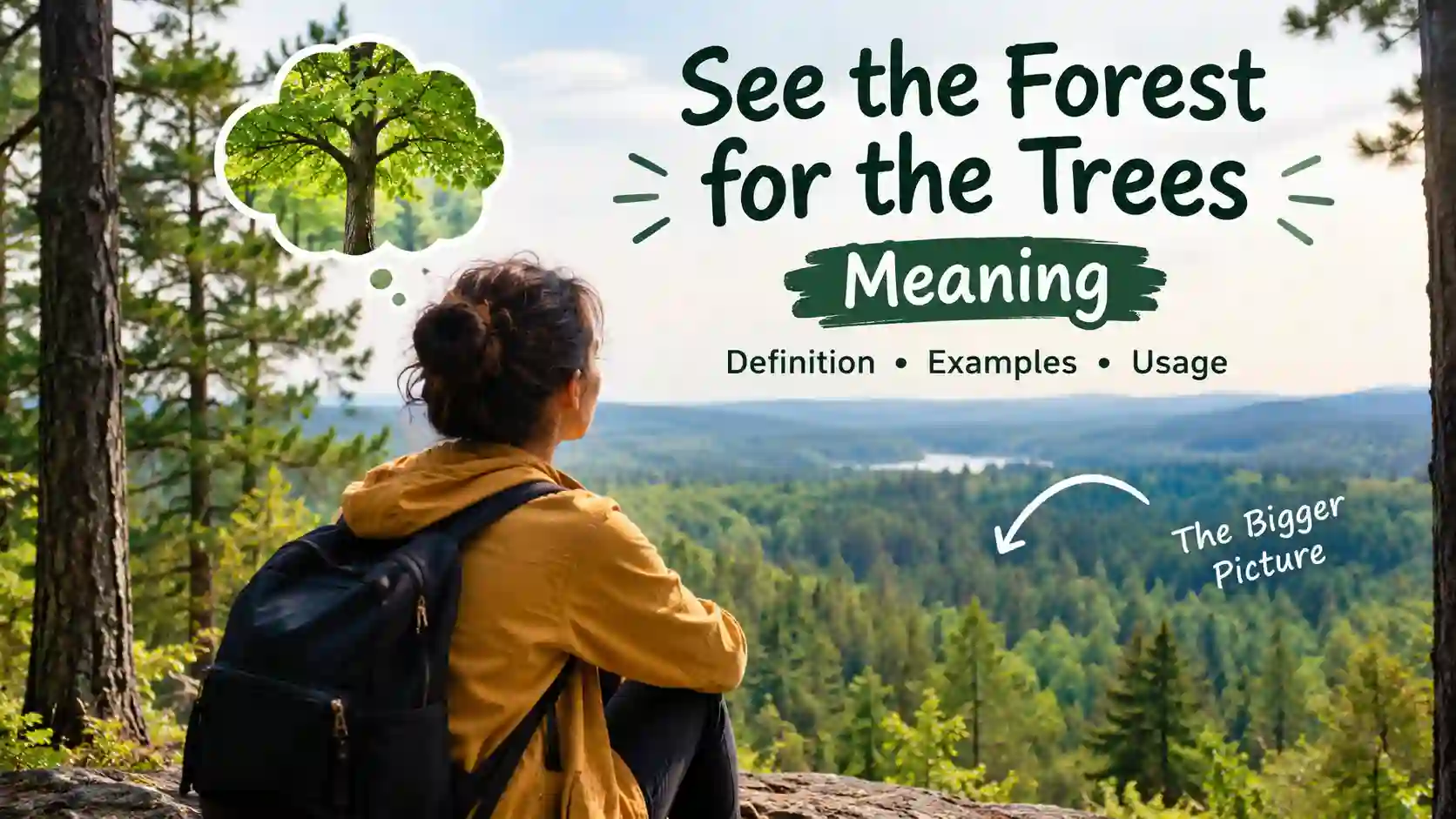
The expression means being able to understand the bigger picture instead of getting lost in small details.
In everyday English, it is often used when someone needs to step back, look at the whole situation, and understand what really matters.
The phrase is common in American English, while British English often uses see the wood for the trees.
In this article, you will learn what the expression means, where it comes from, how to use it, common mistakes, and plenty of simple examples.
Quick Answer
The see the forest for the trees meaning is to understand the big picture instead of focusing so much on small details that you miss the main idea.
For example, if someone spends hours fixing tiny problems in a project but does not notice that the project itself is failing, you might say they cannot see the forest for the trees.
The forest represents the whole situation, while the trees represent the individual details.
Cambridge Dictionary explains the negative form, can’t see the forest for the trees, as being unable to understand a situation clearly because you are too involved in it or too focused on details.
| Part of the expression | What it represents |
| Forest | The big picture or whole situation |
| Trees | Small details or individual parts |
| See the forest | Understand the whole situation |
| Cannot see the forest for the trees | Focus too much on details and miss the bigger picture |
See the Forest for the Trees Meaning and Definition
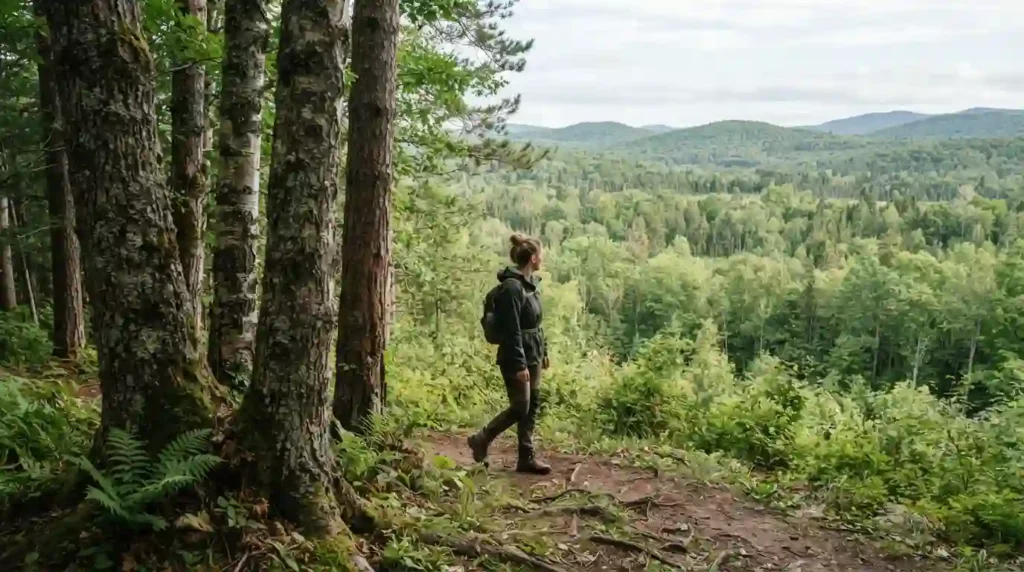
The expression see the forest for the trees means to recognize the larger picture while still understanding the smaller parts.
Most often, the phrase appears in its negative form:
You can’t see the forest for the trees.
This means someone is paying so much attention to details that they fail to understand what is happening overall.
Imagine standing in a forest and looking closely at one tree. You might notice its leaves, branches, and bark. But if you stand too close and only look at that tree, you may forget that you are surrounded by a much larger forest.
The expression uses this simple picture as a metaphor.
For example:
Mark is so focused on fixing one small error that he can’t see the forest for the trees.
The speaker means Mark is concentrating on one minor problem and failing to notice the larger issue.
The phrase does not always mean that details are bad. Details can be important. The problem is losing sight of the main goal while dealing with them.
What Does Can’t See the Forest for the Trees Mean?
Can’t see the forest for the trees means someone is too focused on individual details to understand the whole situation.
It can also suggest that a person is too closely involved in something to view it clearly.
For example, a student might spend three hours choosing the perfect title for an essay but have very little time left to write the essay itself. A teacher could say:
You’re spending too much time on the title. You can’t see the forest for the trees.
The student is not necessarily doing something wrong by caring about the title. The problem is that the title is much less important than completing the entire assignment.
The expression is useful because it reminds us to balance details and perspective.
| Situation | Small detail | Bigger picture |
| School project | Fixing one sentence | Finishing the whole project |
| Work | One minor mistake | The success of the entire job |
| Business | One customer complaint | Overall customer satisfaction |
| Relationship | One argument | The health of the relationship |
| Personal goal | One bad day | Long-term progress |
See the Forest for the Trees vs. Can’t See the Forest for the Trees
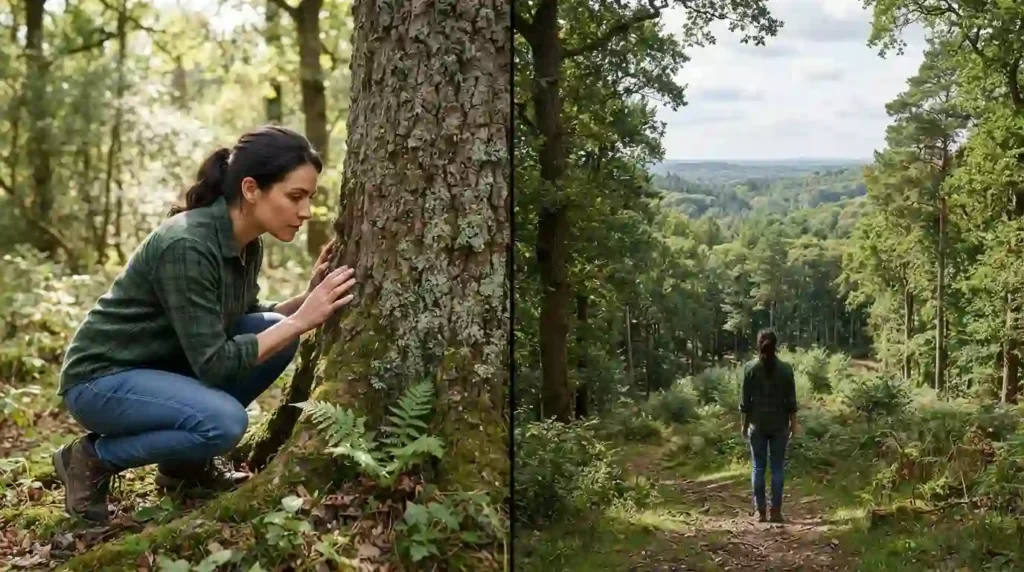
There is a small difference between the positive and negative forms.
See the forest for the trees suggests that someone can understand the bigger picture despite the details.
Can’t see the forest for the trees suggests that someone is failing to understand the bigger picture because of those details.
The negative version is much more common in everyday English.
For example:
Positive:
She knows how to see the forest for the trees when managing a large project.
This means she can understand both the details and the overall goal.
Negative:
He can’t see the forest for the trees.
This means he is too focused on details to understand the larger situation.
The phrase is usually used when someone needs a wider perspective.
Grammar and Correct Usage
The expression is an idiom, which means its meaning is not meant to be understood only from the literal words.
A common form is:
Subject + can’t + see the forest for the trees.
Examples include:
I’m so worried about this one problem that I can’t see the forest for the trees.
She is too focused on small mistakes to see the forest for the trees.
The team needs to step back and see the forest for the trees.
You can also use the phrase with other forms of see.
For example:
After taking a break, he was finally able to see the forest for the trees.
This means he gained a better understanding of the overall situation.
The expression is normally used figuratively rather than literally.
Is Forest or Wood Correct?
Both versions are correct, but they are associated with different varieties of English.
In American English, people commonly say:
Can’t see the forest for the trees.
In British English, the common version is:
Can’t see the wood for the trees.
Cambridge Dictionary lists can’t see the forest for the trees as the U.S. form and can’t see the wood for the trees as the U.K. form.
| American English | British English |
| See the forest for the trees | See the wood for the trees |
| Can’t see the forest for the trees | Can’t see the wood for the trees |
| Forest | Wood |
The meaning is essentially the same.
If you are writing for an American audience, forest is the natural choice.
Origin and History of the Expression
The idea behind see the forest for the trees is very old. The wording can be traced back to an English proverb recorded in the 16th century.
English writer John Heywood included an early version in his 1546 collection of English proverbs. The wording used wood rather than forest.
The older form was:
You cannot see the wood for trees.
The basic idea was already the same: individual trees could prevent someone from seeing the larger wood or forest.
The exact origin of the underlying saying is not certain. Since Heywood was collecting proverbs, his 1546 record does not necessarily mean he invented the expression. It shows that the proverb was already known by that time.
Over the years, the wording developed into forms such as can’t see the forest for the trees, which became common in American English.
The expression has continued to be used because its image is easy to understand. A person can become so focused on the individual trees that the larger forest disappears from view.
Real-Life Examples of See the Forest for the Trees
The expression can be used in many parts of everyday life.
At work:
The manager keeps worrying about small formatting problems, but she can’t see the forest for the trees.
Here, the formatting issues are minor compared with the larger problem.
At school:
Tom spent all night correcting one paragraph and forgot to finish the rest of his paper. He couldn’t see the forest for the trees.
In business:
The company is focused on cutting one small expense while ignoring its much bigger financial problems.
Someone might describe this by saying:
They can’t see the forest for the trees.
In relationships:
They keep arguing about who said what first instead of talking about why they are upset.
Again, the people are focused on small details instead of the larger issue.
In personal goals:
I missed one workout and felt like I had failed completely. Then I realized I was not seeing the forest for the trees.
The person was focusing on one setback instead of looking at their overall progress.
Common Mistakes to Avoid
One common mistake is changing the expression to see the forest through the trees. Although people may understand what you mean, the established idiom is see the forest for the trees.
Another mistake is using the phrase when there is no larger picture involved. The idiom works best when there is a clear contrast between small details and the overall situation.
It is also important not to assume that every detail is unimportant. The expression does not tell people to ignore details. Instead, it suggests that details should be considered in the context of the whole situation.
For example, a doctor, engineer, teacher, or accountant may need to pay close attention to small details. That does not automatically mean they cannot see the forest for the trees.
| Common mistake | Better usage |
| See the forest through the trees | See the forest for the trees |
| Using it for any detailed task | Use it when details hide the bigger picture |
| Saying details never matter | Say the person is losing sight of the overall goal |
| Taking it literally | Usually use it as an idiom |
Synonyms and Similar Expressions

Several English expressions have a similar meaning.
See the big picture means to understand the whole situation rather than only one part.
Look at the bigger picture encourages someone to consider the wider situation.
Miss the point means to fail to understand the main idea.
Lose sight of the goal means to become distracted from what you are trying to achieve.
Get caught up in the details means to become very focused on small parts of something.
For example:
Don’t get caught up in the details. Look at the bigger picture.
This sentence communicates almost the same general idea as see the forest for the trees.
How to Use the Phrase Naturally
Use the expression when you want to point out that someone is focusing too heavily on details.
It can be used in friendly advice:
Take a step back. You might be too close to the problem to see the forest for the trees.
It can also be used at work:
Let’s focus on the main goal. We don’t want to get lost in the details.
Or in personal conversations:
I know this mistake is frustrating, but try to see the forest for the trees.
The tone depends on the situation. Sometimes it can sound critical, especially when telling another person that they are missing the main point. In a sensitive conversation, a softer phrase such as Let’s step back and look at the bigger picture may sound more helpful.
FAQs
What does see the forest for the trees mean?
It means understanding the bigger picture instead of becoming so focused on small details that you miss the main point.
What does can’t see the forest for the trees mean?
It means someone is too focused on details or too involved in a situation to understand it clearly as a whole.
Is see the forest for the trees an idiom?
Yes. It is an English idiom that uses a forest and individual trees as a metaphor for the whole situation and its smaller parts.
What is the British version of see the forest for the trees?
British English commonly uses see the wood for the trees or can’t see the wood for the trees. The meaning is the same.
Is see the forest through the trees correct?
The standard idiom is see the forest for the trees. Through the trees is sometimes heard, but it is not the usual established form.
Where did see the forest for the trees come from?
An early version was recorded by John Heywood in a 1546 collection of English proverbs. The older wording used wood rather than forest.
Conclusion
The see the forest for the trees meaning is simple: understand the bigger picture instead of becoming so focused on small details that you miss what matters most. The forest represents the whole situation, while the trees represent its individual parts.
The expression is often used in its negative form, can’t see the forest for the trees, when someone is too involved in details to understand the situation clearly.
American English commonly uses forest, while British English usually uses wood. The proverb has a long history, with an early written example appearing in John Heywood’s 1546 collection.
When you feel overwhelmed by details, try stepping back and asking one simple question: What is the bigger picture? That small change in perspective can help you understand the situation more clearly.

Muhammad Haroon is the founder and writer behind Factnora.com, a platform focused on sharing interesting, useful, and reliable information. His work covers biographies, history, facts, and stories that help readers discover something new in a simple and engaging way. Through factnora, Muhammad aims to make learning enjoyable while presenting information in a clear and reader-friendly style.