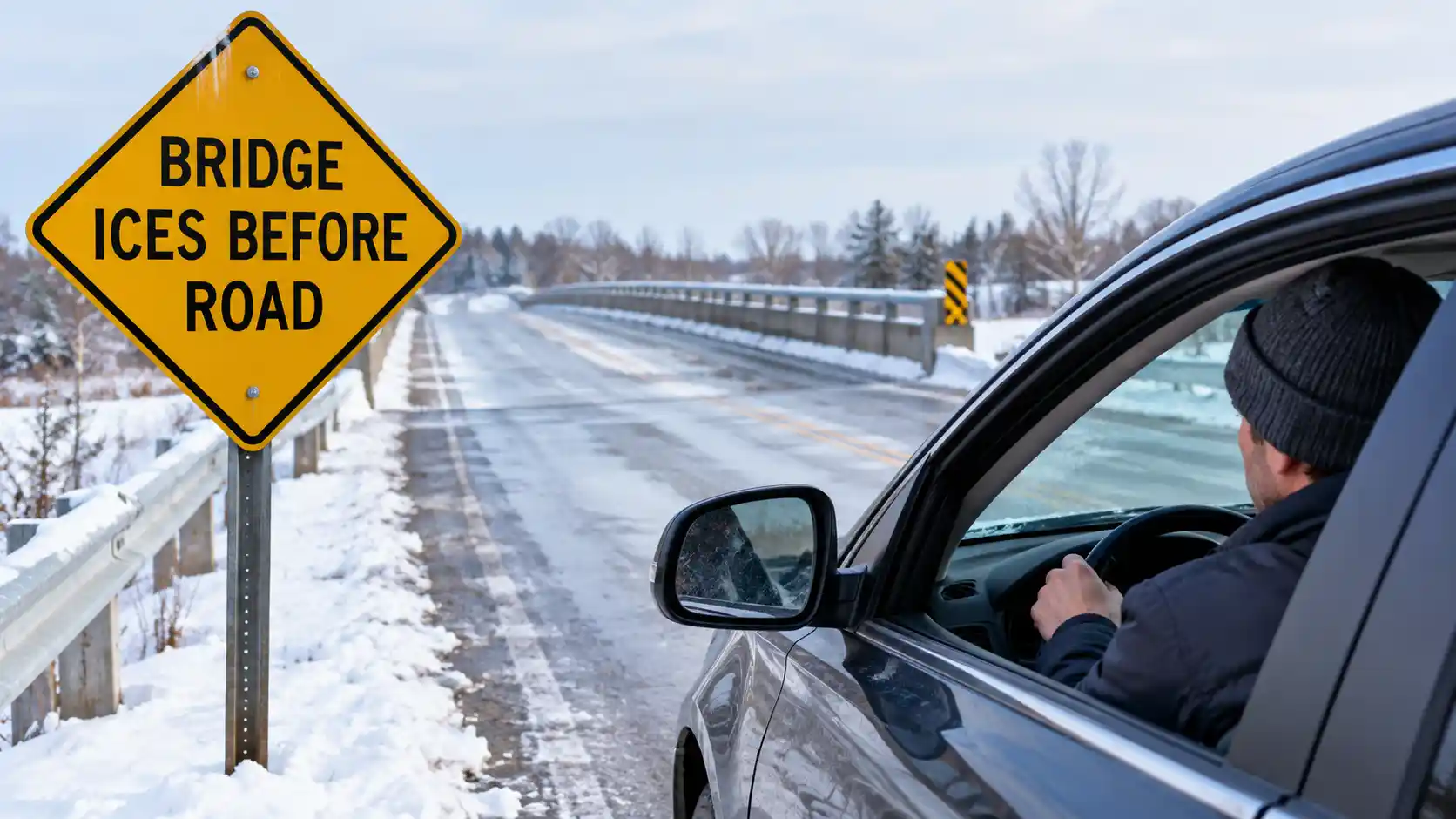
If you have ever seen the warning bridge ices before road, it means a bridge can become icy before the nearby road does.
Bridges are exposed to cold air above and below, so they often lose heat faster. This simple warning tells drivers to slow down and use extra care because a bridge may be slippery even when the road looks clear.
Quick Answer
The bridge ices before road meaning is a safety warning about winter driving. A bridge can freeze sooner than a normal road because cold air moves around its surface from above and below. A road sitting on the ground can stay warmer for longer.
For example, imagine driving on a clear road on a cold morning. You reach a bridge, and the bridge surface looks normal. Even so, it may have a thin layer of ice. If you keep the same speed, your tires may suddenly lose grip.
That is why signs saying Bridge Ices Before Road are placed near bridges in areas where freezing weather is common.
| Warning | Simple meaning | What a driver should do |
| Bridge Ices Before Road | The bridge may freeze first | Slow down and drive carefully |
| Slippery When Wet | The surface may have poor grip when wet | Reduce speed |
| Ice on Bridge | Ice may already be present | Drive very slowly and avoid sudden moves |
| Watch for Ice | Icy conditions may occur | Stay alert and leave extra space |
The warning does not mean every bridge will always be icy before every road. It tells you that bridges can freeze sooner under the right weather conditions.
What Does Bridge Ices Before Road Mean?
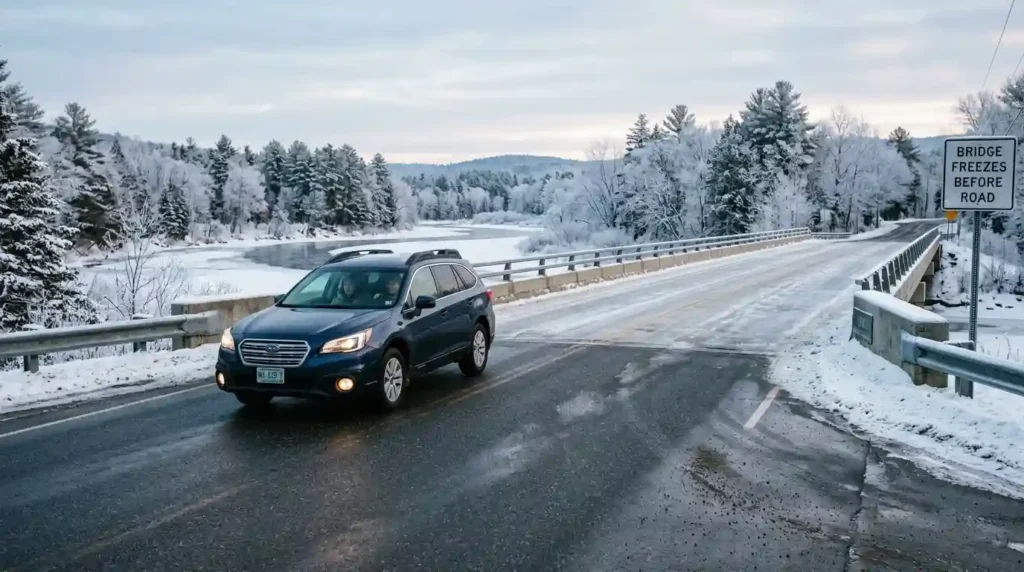
The phrase bridge ices before road means that a bridge surface can reach freezing temperatures faster than a road built directly on the ground.
This happens because a bridge is surrounded by cold air. A normal road usually has soil beneath it. That ground can hold heat and slow the cooling process.
A bridge does not have the same amount of warm material underneath it. Cold air can move above and below the bridge deck. As the bridge loses heat, its surface can become cold enough for water to freeze.
This is especially important when temperatures are close to freezing.
For example, suppose the air temperature is around 32°F. A wet road may not freeze right away. But a bridge deck may cool enough for water to turn into ice.
The ice may be very thin and hard to see. Drivers sometimes call this black ice because it can look like ordinary pavement.
The main message is simple: Do not assume a bridge is safe just because the road before it is clear.
Why Do Bridges Freeze Before Roads?
The main reason is heat loss.
A road on the ground has soil beneath it. Soil stores heat and can release some of that heat as the air becomes colder. This can help keep the road surface above freezing for a little longer.
A bridge deck is different. It is exposed to the air on more sides.
Cold air can pass beneath the bridge. Wind can also move across the surface. These conditions allow the bridge deck to lose heat quickly.
Here is a simple comparison:
| Feature | Road on ground | Bridge deck |
| Material underneath | Soil or ground | Open air |
| Cold air underneath | Usually no | Yes |
| Heat loss | Often slower | Often faster |
| Risk of early icing | Lower in some conditions | Higher in some conditions |
| Driver concern | Normal winter caution | Extra caution |
This does not mean a road can never freeze first. Weather, pavement temperature, moisture, wind, shade, traffic, and other conditions all matter.
The warning is based on a general winter safety risk, not a guarantee about what will happen at every bridge.
How Does Ice Form on a Bridge?
Ice can form when water on a surface cools to its freezing point and freezes.
On a bridge, several things can provide moisture. Rain, melting snow, frost, or water from nearby areas can leave the bridge deck wet. If the deck becomes cold enough, that water can freeze.
The process can happen without a dramatic snowstorm.
For example, consider this situation:
A rainy afternoon is followed by a cold night. The temperature drops close to freezing. The road may still appear wet, but the bridge deck loses heat more quickly. Water on the bridge can freeze.
The next morning, a driver may see what looks like a normal wet surface. In reality, a thin layer of ice could be present.
That is one reason the warning deserves attention even when you cannot see snow or obvious ice.
What Is Black Ice?
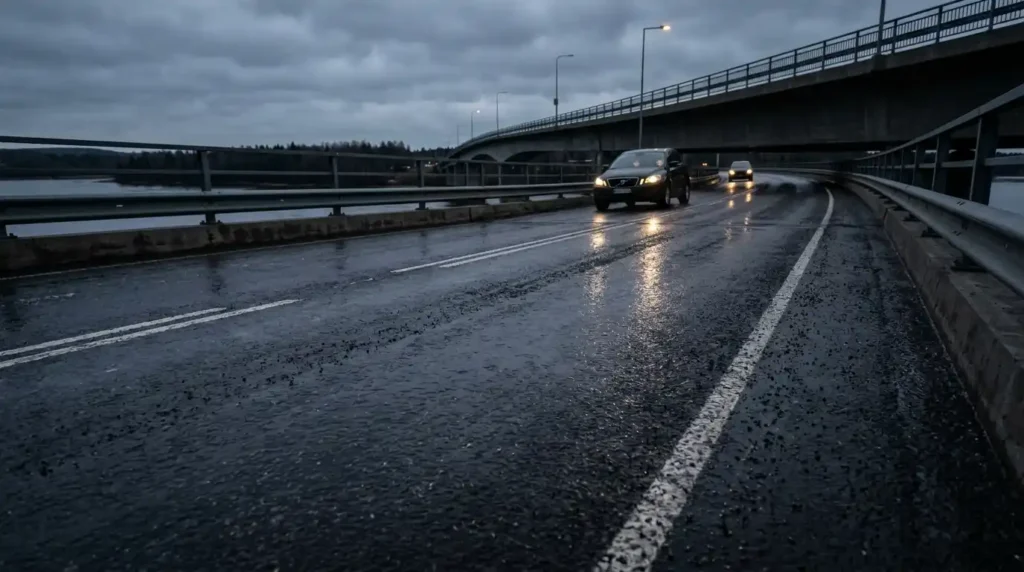
Black ice is a thin layer of ice that can be difficult to see because it may look like the pavement underneath it.
It is not usually black in color. The name comes from the way the dark road can show through the clear ice.
Black ice is especially dangerous because a driver may not realize the surface is slippery until the vehicle begins to slide.
Bridges can be places where drivers should watch for this type of hidden ice during freezing weather.
If the road looks unusually shiny, especially near a bridge, it is wise to slow down rather than assume the surface is simply wet.
Why Is the Warning Important for Drivers?
The warning gives drivers information that they cannot always see.
A bridge may look exactly like the road behind you. The pavement may appear dry. Yet its temperature can be different from the road surface.
The sign is asking drivers to prepare for a possible change in traction.
When you approach a bridge during cold weather, avoid sudden actions. Sudden braking, fast acceleration, or sharp steering can make it harder to control the vehicle if the surface is icy.
A better approach is to reduce your speed before reaching the bridge and keep enough space between your vehicle and the one ahead.
| Driving action | Why it helps |
| Slow down before the bridge | Gives you more control |
| Leave extra following space | Gives you more time to react |
| Avoid sudden braking | Reduces the chance of losing traction |
| Avoid sudden steering | Helps maintain vehicle stability |
| Watch the road surface | Helps you notice changing conditions |
What Should You Do When You See the Sign?
When you see a Bridge Ices Before Road sign, treat it as an early warning.
First, reduce your speed before entering the bridge. Do not wait until you are already on a slippery surface.
Next, keep your steering smooth. Try not to make quick turns or lane changes.
It is also important to avoid following another vehicle too closely. If that driver loses control, you need enough room to respond.
If conditions are already icy, drive according to the road and weather conditions. Your vehicle may have modern safety systems, but electronic systems cannot remove the basic problem of reduced tire grip.
Winter tires can also be useful in places that regularly experience snow and ice, but even good tires cannot make an icy bridge completely safe.
Real-Life Examples of the Meaning
The phrase becomes easier to understand through everyday situations.
Example 1: Cold morning
You drive on a clear road at 7 a.m. The temperature is below freezing. You approach a bridge with a warning sign. The road looks dry, but the bridge may have frozen moisture.
The correct response is to slow down and stay alert.
Example 2: Rain followed by freezing weather
Rain falls during the evening. Temperatures drop overnight. In the morning, water on the bridge may have frozen.
The road may appear wet, while the bridge has a thin layer of ice.
Example 3: Snow begins to melt
Snow melts during the day and leaves water on the pavement. Temperatures fall after sunset. A bridge can cool quickly, allowing that water to freeze.
These examples show why the sign is useful even when the weather does not look extremely dangerous.
Is Bridge Ices Before Road a Literal Statement?
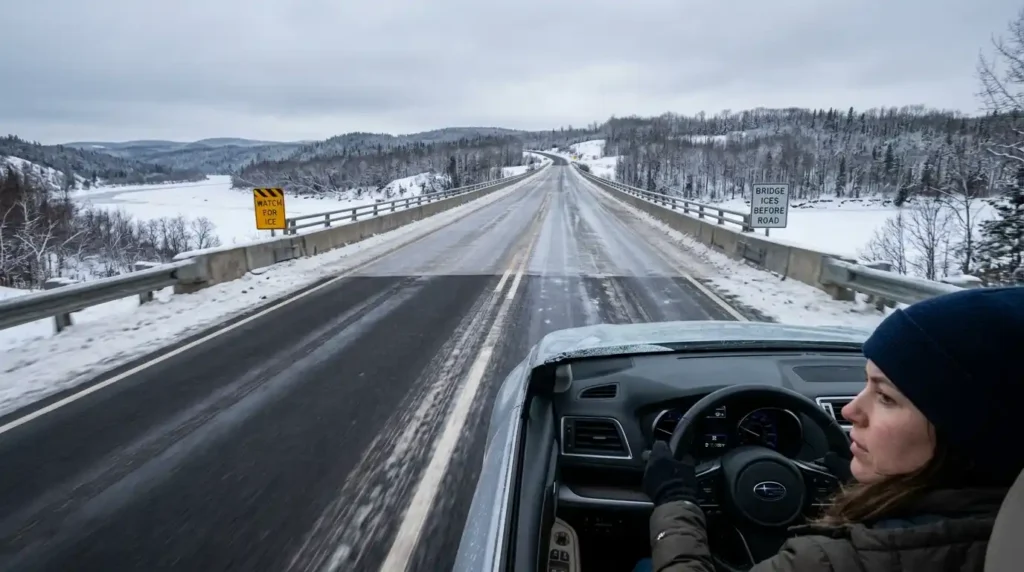
It is a general safety statement rather than a rule that applies in every situation.
The phrase means bridges can ice before nearby roads because of how quickly they can lose heat. It does not promise that every bridge will freeze first.
Many conditions affect pavement temperature. These include air temperature, wind, sunlight, moisture, pavement type, traffic, bridge design, and the temperature of the ground.
For that reason, drivers should think of the sign as a warning to expect possible ice, not as a scientific prediction for every bridge.
This distinction is important.
| Statement | Accurate? |
| Bridges can freeze before nearby roads | Yes |
| Every bridge always freezes first | No |
| A clear road means the bridge is safe | No |
| A bridge can be icy without visible snow | Yes |
| Drivers should slow down in freezing conditions | Yes |
Common Mistakes Drivers Make
One common mistake is assuming that a clear road means there is no ice.
A driver may travel normally for several miles and then reach a bridge. Because nothing looked dangerous before it, the driver may not slow down.
Another mistake is braking hard after reaching the bridge. If the bridge is already slippery, sudden braking can make the vehicle harder to control.
Some drivers also think a large vehicle or four-wheel-drive vehicle cannot slide on ice. That is not correct. Different vehicles have different abilities, but all vehicles depend on tire-road contact for traction.
A final mistake is ignoring the sign because the temperature does not seem very cold. Roads and bridge surfaces can have different temperatures, and conditions can change quickly.
Bridge Ices Before Road Meaning in Everyday Language
In simple words, bridge ices before road means be careful because this bridge may be slippery before the road around it freezes.
It is similar to other road safety messages that tell drivers about a condition they may not immediately see.
You can think of it as a short sentence with a longer message:
Cold weather + moisture + exposed bridge = possible early ice.
The sign is designed to help drivers prepare before they reach the potentially slippery area.
Where Might You See This Warning?
You are most likely to see this type of warning in places where winter temperatures can create icy road conditions.
It may appear before bridges, overpasses, elevated roads, or similar structures.
The exact wording can vary. Some road signs may use phrases such as Bridge Ices Before Roadway or another warning about ice on bridges.
The wording may differ, but the safety idea is similar: pay special attention to the road surface on elevated sections during freezing weather.
FAQs
What does bridge ices before road mean?
It means a bridge can become icy before the nearby road because the bridge can lose heat faster. Drivers should slow down and use extra care in cold weather.
Why does a bridge freeze faster than a road?
A bridge is exposed to cold air above and below its surface. A road on the ground has soil underneath it, which can retain heat and slow cooling.
Does every bridge ice before the road?
No. The phrase is a safety warning, not a guarantee. Weather, moisture, wind, sunlight, pavement temperature, and other factors affect when ice forms.
What should I do when I see the sign?
Slow down before reaching the bridge, leave extra space between vehicles, and avoid sudden braking, steering, or acceleration.
Is black ice really black?
Usually, no. Black ice is often clear or nearly transparent, so the dark pavement underneath can make it appear black.
Can a bridge be icy when the road looks clear?
Yes. A bridge can cool faster than the nearby road, so ice may form on the bridge even when other pavement does not appear icy.
Conclusion
The bridge ices before road meaning is simple but important: a bridge may become slippery before the road around it because the bridge deck can lose heat quickly.
Cold air can reach the bridge from above and below, while a normal road has ground underneath that can hold heat.
The warning does not mean every bridge will freeze first. Instead, it tells drivers to expect a possible change in road conditions.
When you see the sign during cold or wet weather, slow down before reaching the bridge, leave more space between vehicles, and avoid sudden movements.
The safest approach is to take the warning seriously even when the pavement looks clear. A thin layer of ice can be difficult to see, but careful driving gives you a better chance of staying in control.

Ali Sher is a writer and the creator of Factnora.com, a website dedicated to sharing fascinating facts, biographies, history, and useful knowledge. He enjoys researching interesting topics and turning them into simple, engaging stories for readers. Through factnora, Muhammad aims to provide informative content that is easy to understand, enjoyable to read, and worth sharing.