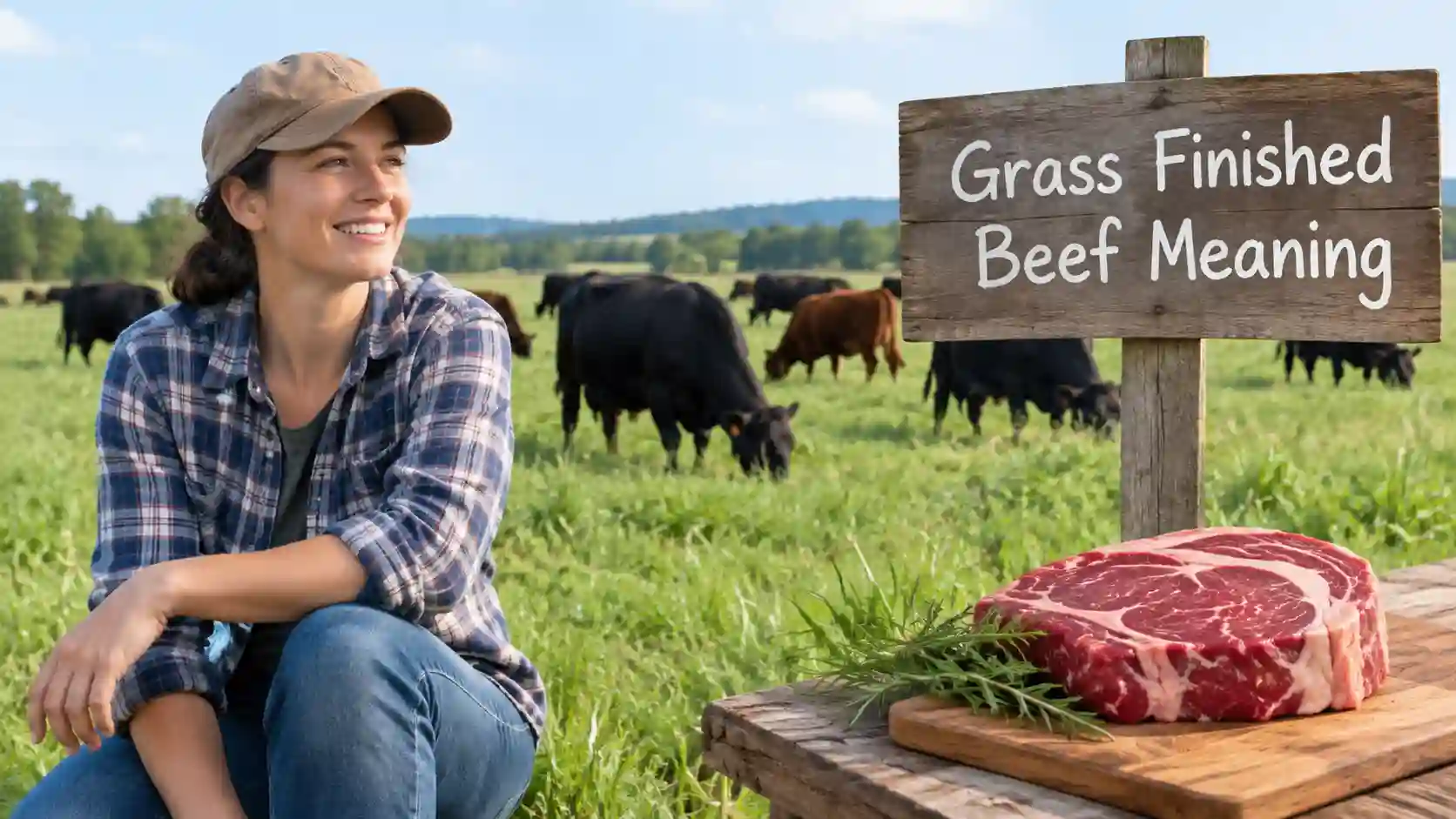
If you are wondering about the grass finished beef meaning, it simply means beef from cattle that were raised on grass or forage and kept on that type of feed through the finishing stage before processing. Unlike grain-finished cattle, these animals are not switched to a grain-based diet near the end of their lives.
In the United States, USDA guidance defines grass (forage) fed as cattle consuming forage for their lifetime after weaning, with no grain or grain byproducts.
The term can be confusing because labels such as grass-fed, grass finished, and pasture raised are sometimes used together. They do not always tell you exactly how the animal was raised.
Quick Answer
Grass finished beef means beef from cattle that were finished on grass or other forage instead of being switched to a grain-based finishing diet.
The word finished is important. Cattle may eat grass during part of their lives and later receive grain before processing. When cattle remain on grass or forage during the finishing period, the beef is commonly described as grass finished.
Under the USDA’s grass-fed standard, forage can include grasses, legumes, browse, and certain cereal crops while they are still in the vegetative stage. Grain and grain byproducts are not part of that diet.
So, in simple terms:
| Term | Basic meaning |
| Grass finished | Cattle remain on grass or forage through the finishing stage |
| Grain finished | Cattle receive a grain-based diet during the finishing stage |
| Grass fed | A label describing a forage-based feeding system; the exact claim should be checked |
| Pasture raised | Cattle spent time on pasture, but this term alone does not necessarily describe the entire finishing diet |
The exact meaning of a label can depend on the producer and the claim being made, so checking the package or asking the farmer can give you more information.
What Is Grass Finished Beef?

Grass finished beef comes from cattle that are raised and finished primarily on forage.
Cattle are natural grazing animals. They can eat grasses and other plants and turn that forage into meat. In a grass-finishing system, cattle continue eating pasture, hay, or other approved forage instead of being moved to a grain-heavy finishing diet.
The word finished refers to the final stage of raising cattle before slaughter. This stage can affect the amount and type of fat in the meat, as well as some aspects of its flavor and texture.
This is why grass fed and grass finished are not always interchangeable in everyday conversation.
A steak can come from cattle that ate grass when they were young but later received grain. In that case, the cattle were grass-fed for part of their lives but were not grass finished.
This difference matters to shoppers who specifically want beef from cattle finished on forage.
Grass Fed vs. Grass Finished Beef
The two phrases sound almost identical, but they can communicate different things.
Grass fed focuses on what the cattle eat. Grass finished puts extra attention on the animal’s final feeding stage.
For example, imagine two cattle farms.
On Farm A, cattle eat grass for most of their lives but receive grain during the final months.
On Farm B, cattle continue eating grass and forage until they are ready for processing.
The beef from Farm B would fit what most shoppers mean when they say grass finished beef.
The distinction is useful because the finishing diet can influence the nutritional and physical characteristics of beef.
| Feature | Grass finished beef | Grain finished beef |
| Main finishing feed | Grass and forage | Often a grain-based feed |
| Final feeding stage | Forage-based | Grain-based |
| Fat profile | Can differ depending on forage and management | Can differ depending on grain-based diet |
| Flavor | Often described as more distinct or earthy | Often described as mild and rich |
| Fat amount | Often leaner, though it varies | Often more marbled, depending on cattle and feeding |
| Nutrition | Can have different fatty acid and mineral patterns | Also provides protein, iron, zinc, and other nutrients |
These are general differences, not guarantees. Breed, age, forage quality, farming practices, and other factors can affect the final beef.
How Is Grass Finished Beef Produced?
The process starts with cattle being raised on a farm or ranch.
Young cattle may begin life drinking milk and eating forage. As they grow, they spend more time eating grass, pasture plants, hay, or other forage.
In a grass-finishing system, the producer continues feeding forage through the final growth period.
The quality of that forage matters. Grass is not exactly the same everywhere. Different pastures can contain different plants, minerals, and nutrients.
Weather can also affect pasture quality. A ranch during a rainy growing season may have very different forage from the same ranch during a dry season.
Some producers use rotational grazing. This means cattle are moved between pasture areas instead of staying in one location all the time. The goal can include managing forage growth and pasture conditions.
Recent research has found that pasture diversity and management can affect the nutritional composition of grass-finished beef. However, researchers also found considerable variation among individual beef samples.
This is one reason it is better to think of grass finished beef as a production system, rather than assuming every steak will have exactly the same nutritional profile.
What Does Grass Finished Beef Taste Like?
Taste is one of the biggest reasons people become interested in grass finished beef.
Many people describe grass finished beef as having a stronger or more noticeable beef flavor. Some describe it as earthy, grassy, or slightly mineral-like.
Grain-finished beef is often described as richer, milder, and more buttery, especially when it has more visible marbling.
However, taste is not controlled by diet alone.
Breed, age, cut, fat level, cooking method, and meat quality can all influence flavor.
For example, a grass finished ribeye may taste very different from grass finished ground beef. A lean steak can also taste different from a well-marbled steak.
Because of these differences, there is no single flavor that applies to every piece of grass finished beef.
Is Grass Finished Beef More Nutritious?

Grass finished beef can have a different nutrient profile from grain-finished beef, especially in its fatty acids and some minerals.
A 2026 study of more than 300 commercial North American beef samples found that grass-fed beef had, on average, higher amounts of several omega-3 fatty acids and certain minerals than grain-fed samples. However, the researchers also found substantial variation within both production systems.
The study reported higher average levels of alpha-linolenic acid, EPA, DPA, and CLA in grass-fed samples. It also found higher average concentrations of calcium, copper, iron, and selenium.
That does not mean every grass finished steak will contain more of every nutrient.
Nutrition can vary based on the animal, breed, pasture, finishing system, and other factors. Some grain-finished samples overlapped with or exceeded certain grass-fed samples for individual nutrients.
A simple comparison looks like this:
| Nutritional factor | Grass finished beef | Grain finished beef |
| Protein | Good source | Good source |
| Iron | Good source | Good source |
| Zinc | Good source | Good source |
| Omega-3 fatty acids | Often higher on average | Often lower on average |
| Total fat | Often lower, but varies | Often higher, depending on marbling |
| Nutrient variation | Can be considerable | Can also vary |
Grass finished beef should therefore not be viewed as a completely different food. Both types of beef can provide important nutrients such as protein, iron, zinc, and B vitamins.
Does Grass Finished Beef Have More Omega-3?
This is one of the most common questions about grass finished beef.
Research generally shows that grass-based feeding can increase certain omega-3 fatty acids in beef. A recent North American study found higher levels of several omega-3 fatty acids in grass-fed samples compared with grain-fed samples.
However, the difference is not identical in every animal.
The 2026 study found wide variation in omega-6 to omega-3 ratios among grass-fed samples. Some samples had nutritional profiles that were closer to grain-fed beef.
This means it is better to say grass finished beef can contain more omega-3 fatty acids on average, rather than saying every grass finished steak is automatically high in omega-3.
That distinction keeps the claim accurate.
Is Grass Finished Beef Leaner?
Grass finished beef is often leaner than grain-finished beef, although this depends on several factors.
Cattle breed, age, genetics, feeding program, and the particular cut of beef can all affect fat content.
Older research reviewing U.S. beef found that grass or forage feeding generally resulted in less total fat than grain finishing.
Less fat can change the cooking experience.
A lean steak may cook faster and can become dry if it is overcooked. For that reason, grass finished steaks often benefit from careful cooking.
Using a meat thermometer can help you avoid overcooking. Letting the meat rest after cooking can also help keep the texture pleasant.
Grass Finished Beef vs. Grain Finished Beef: Which Is Different?
The biggest difference is the finishing diet.
In a grain-finishing system, cattle may be moved into a feedlot and given a specially formulated diet that contains grains. USDA notes that many U.S. cattle are finished in feedlots where they receive formulated feeds based on corn or other grains.
In a grass-finishing system, cattle continue receiving forage during the finishing period.
These different systems can affect fat content, fatty acid composition, flavor, and other characteristics.
Neither label alone tells you everything about the beef. If you care about animal management, pasture access, antibiotics, organic certification, or other farming practices, look for those claims separately.
Is Grass Finished Beef Healthier?
It is tempting to answer this with a simple yes or no, but the science is more complicated.
Grass finished beef can have a different fatty acid and mineral profile, and several studies have found higher amounts of certain nutrients or compounds in grass-finished beef.
For example, a 2024 study comparing pasture-finished and grain-finished cattle found differences in several compounds, including omega-3 fatty acids and certain vitamins and metabolites. The researchers also stressed that the findings should not be interpreted to mean grain-finished beef is unhealthy. Human clinical research is still needed to determine how such differences affect long-term health.
So, a careful answer is:
Grass finished beef can offer some nutritional differences, but calling it automatically healthier oversimplifies the evidence.
Overall diet, portion size, cooking method, and how often you eat red meat also matter.
What Should You Look for When Buying Grass Finished Beef?
If you want grass finished beef, do not rely only on attractive words on the front of a package.
Read the label carefully.
Look for terms such as grass finished, grass fed, or specific information about the animal’s diet. If you are buying directly from a ranch, ask If the cattle received grain at any point during the finishing period.
You can also ask:
Was the animal finished entirely on forage?
What types of forage were used?
Did the cattle receive grain or grain byproducts?
How long were the cattle on pasture?
What does the producer mean by grass finished?
These questions can help you understand exactly what you are buying.
The USDA’s grass-fed standard provides a useful reference because it specifies that cattle claiming the grass-fed designation must receive forage as the feed source for life after weaning, with no grain or grain byproducts.
Common Mistakes About Grass Finished Beef
One common mistake is assuming grass fed always means exactly the same thing as grass finished.
Another mistake is believing grass finished beef is automatically healthier in every way. Research shows nutritional differences, but those differences can vary greatly.
It is also incorrect to assume that every grass finished steak is lean, tough, or strongly flavored. Those qualities depend on much more than feeding style.
Finally, some shoppers believe grass finished beef contains no fat. That is not true. Beef from grass-finished cattle still contains fat, although the amount can vary.
Understanding these differences helps you avoid making decisions based only on marketing language.
FAQs
What does grass finished beef mean?
Grass finished beef comes from cattle that remain on grass or other forage during the finishing stage instead of being switched to a grain-based finishing diet.
Is grass finished the same as grass fed?
Not always. Grass fed describes a forage-based feeding claim, while grass finished emphasizes that the cattle stayed on forage through the final finishing stage. USDA’s grass-fed standard provides specific requirements for the claim.
Does grass finished beef taste different?
It can. Many people notice a stronger or more distinctive flavor in grass finished beef, but taste also depends on breed, cut, fat content, age, and cooking method.
Is grass finished beef leaner?
It is often leaner than grain-finished beef, but this is not guaranteed. Breed, genetics, age, cut, and feeding practices all affect fat levels.
Does grass finished beef contain more omega-3?
Grass-based feeding can result in higher levels of certain omega-3 fatty acids. Recent North American research found higher average omega-3 levels in grass-fed samples, although there was substantial variation among samples.
Is grass finished beef healthier than regular beef?
Grass finished beef may have some nutritional advantages, but it is too simple to call it automatically healthier. Both types can provide protein, iron, zinc, and other nutrients, and nutritional differences vary between products.
Conclusion
The grass finished beef meaning is simple once you understand the word finished. It refers to beef from cattle that continue eating grass or other forage during the final stage of raising, rather than being switched to a grain-based finishing diet.
Research has found that grass-fed beef often contains higher levels of some omega-3 fatty acids and minerals, but the differences can vary widely from one product to another.
If you want to buy grass finished beef, pay attention to the exact label and ask the producer how the cattle were fed.
The most useful question is simple: What did the cattle eat during the finishing period? That answer will tell you much more than a marketing phrase alone.

Muhammad Haroon is the founder and writer behind Factnora.com, a platform focused on sharing interesting, useful, and reliable information. His work covers biographies, history, facts, and stories that help readers discover something new in a simple and engaging way. Through factnora, Muhammad aims to make learning enjoyable while presenting information in a clear and reader-friendly style.