
People may be placed in protective custody for different reasons. They could face threats, have concerns related to gang conflicts, be a witness or informant, or have charges that may put them at greater risk inside the facility.
Being in PC does not automatically mean that a person has done something wrong while in jail, and it does not always mean the person is an informant.
In this article, you will learn what PC means in jail, why someone may be placed in protective custody, how PC differs from general population and solitary confinement, and what life in protective custody may look like.
Because rules vary between correctional facilities, we will also explain why the exact meaning and conditions can depend on the specific jail or prison.
Quick Answer
In jail or prison, PC means Protective Custody. A person placed in PC is generally housed separately from some or all of the general population because of a safety concern.
This may happen because of threats, a person’s charges, gang-related issues, cooperation with authorities, witness status, or another situation that could make regular housing unsafe.
PC is mainly about safety, not punishment. However, being in protective custody can involve restrictions on movement, housing, programs, and contact with other incarcerated people. The details depend on the correctional facility.
| Term | Meaning | Basic purpose |
| PC | Protective Custody | Protect a person from possible harm |
| General Population | Regular inmate housing | Normal housing for many inmates |
| SHU | Special Housing Unit | Separate housing used for several reasons |
| Disciplinary Confinement | Punitive separation | Punishment for certain rule violations |
What Does PC Mean in Jail?
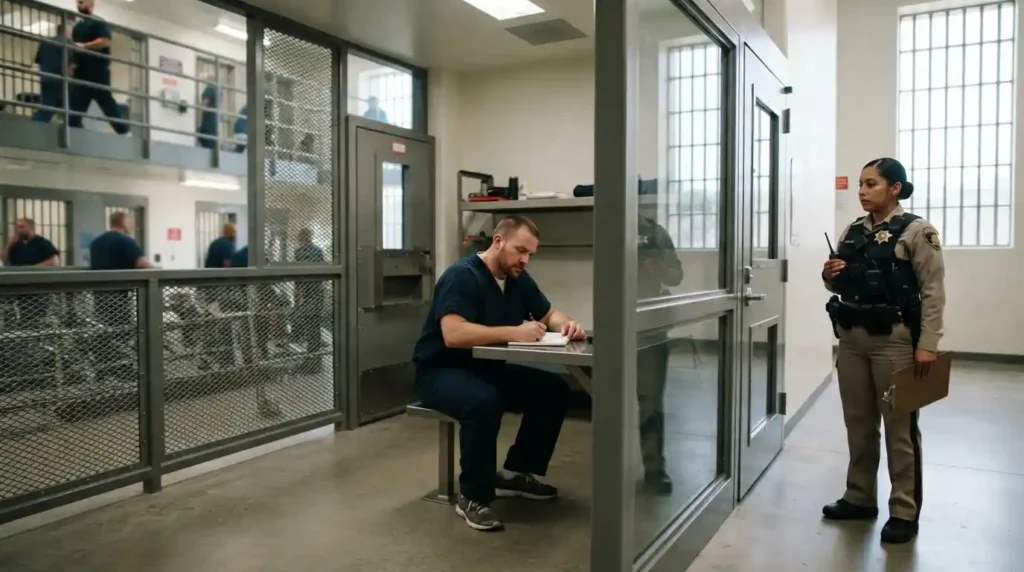
The most common PC meaning in jail is Protective Custody.
Protective custody is a way for a jail or prison to separate someone from other incarcerated people when there is a safety concern. The person may be moved to a different housing area, unit, or section of the facility.
For example, imagine that an inmate receives serious threats from another group inside the jail. If officials believe those threats are real, they may decide that keeping the person in the normal housing area creates too much risk. The person may then be placed in protective custody.
The purpose is to reduce the chance of violence or other harm.
Official correctional materials use PC to mean Protective Custody. For example, an Orange County Sheriff’s Department custody manual describes PC inmates as people who require protection from other inmates.
It is important to remember that PC does not have exactly the same meaning or procedure in every facility. A county jail may use different housing rules from a state prison, and terminology can vary by correctional system.
Why Would Someone Be Put in Protective Custody?
There is no single reason why someone may be placed in PC. Correctional staff usually look at the person’s safety, classification, threats, charges, relationships, and other circumstances.
Some possible reasons include:
Threats from other inmates: If someone has received credible threats, officials may separate that person from the people believed to pose the danger.
Gang-related concerns: A person who leaves a gang or has a conflict with a gang may face safety concerns. Some correctional systems specifically consider gang affiliation or gang withdrawal when making PC decisions.
Cooperation with authorities: In some cases, an inmate may face danger because they are known or believed to have provided information to law enforcement.
Witness status: Someone who is an important witness may need additional protection if their identity or role becomes known inside the facility.
The nature of the criminal charge: Certain charges can make a person more vulnerable to attacks from other inmates. Some facilities have policies that specifically identify certain offenses as reasons for PC classification.
Other safety concerns: Officials may also consider personal circumstances, previous threats, or information gathered during classification.
A common mistake is to assume that everyone in PC is there for the same reason. That is not necessarily true. PC is a classification or housing decision, and the reason can differ from person to person.
Is Protective Custody the Same as Solitary Confinement?
Not necessarily.
This is one of the most important points to understand about the PC meaning in jail.
Protective custody usually means a person is separated from general population for safety. But the exact conditions can vary. Some facilities may place PC inmates in a special housing unit, while others may use separate protective housing where inmates can still have certain programs or group activities.
Solitary confinement, on the other hand, generally refers to much more restrictive isolation.
The two can look similar because both may involve separation. However, the reason for the separation is different.
| Protective Custody | Disciplinary Confinement |
| Mainly intended for safety | Mainly intended as punishment |
| Used when a person faces a safety concern | Used after certain rule violations |
| May involve separate housing | May involve restrictive housing |
| Rules vary by facility | Rules vary by facility |
| The person is not necessarily being punished | The separation itself can be part of a disciplinary sanction |
Florida correctional training materials describe protective custody as removing an inmate from general population because of safety concerns.
That distinction matters. Being placed in PC does not automatically mean the inmate did something wrong inside the facility.
How Does Protective Custody Work?
The process can be different depending on the jail or prison.
In some situations, an inmate may tell staff that they are afraid for their safety. Staff can then investigate the concern. In other situations, correctional officials may identify the risk themselves and move the person without the inmate asking.
The facility may consider information such as threats, classification records, charges, gang connections, previous incidents, or information from staff.
For example, an inmate might report that another group has threatened them. Staff could investigate and determine If separation is necessary.
Some correctional systems have formal classification procedures. The Orange County Sheriff’s Department manual, for example, lists several factors that classification staff may consider when determining PC status, including threats, gang affiliations, informant or witness status, and certain charges.
This means PC is not always simply a choice made by the inmate. Depending on the facility, it can be requested by the inmate, ordered by staff, or result from classification procedures.
What Is Life Like in PC?

Life in protective custody depends heavily on the facility.
A person in PC may live in a separate housing unit or area. They may have different rules about recreation, meals, visitors, work, education, and interaction with other inmates.
Some PC units can still allow group activities or contact with other PC inmates. Other facilities may use more restrictive arrangements.
For this reason, it is difficult to give one universal description of what PC life looks like.
One prison glossary notes that PC housing can involve restrictions similar to administrative segregation, including limited movement and reduced access to some programs.
At the same time, official correctional policies show that some systems have different levels or categories of protective custody rather than treating every PC inmate exactly the same.
So if someone says, “He is in PC,” that tells you the person has a protective-custody classification, but it does not tell you exactly how restrictive their daily life is.
Does Being in PC Mean Someone Is a Snitch?
Not automatically.
This is one of the biggest misconceptions about protective custody.
Prison slang sometimes connects PC with people who have cooperated with authorities. Some prison slang references describe PC as protective custody and mention informants or people who face danger from other inmates.
But being in PC does not prove that someone is an informant.
There are many possible reasons for protective custody. A person could be placed there because of threats, their charges, gang conflicts, witness status, or another safety concern.
For example, an official custody policy may classify certain inmates as PC based on charges alone.
Therefore, you should not assume that someone in PC has “snitched” or given information to police.
The reason for PC status is specific to the person and the facility’s classification process.
PC vs. General Population
General population, often shortened to GP, refers to the regular inmate population in a correctional facility.
PC is different because the inmate is separated from some or all of the general population for safety reasons.
Think of it this way:
General population: The person lives with or around the regular inmate population.
Protective custody: The person is placed in a separate setting because normal housing may create a safety problem.
A person in PC may still interact with other inmates who are also in protective housing. Therefore, PC does not always mean that someone is completely alone.
The exact arrangement depends on the facility’s classification system.
Common Examples of PC in Jail
Here are a few simple examples that show how the term can be used.
Example 1:
“John was moved to PC after receiving threats.”
Here, PC means Protective Custody, and the move was connected to a safety concern.
Example 2:
“She is being held in protective custody while officials review the threats against her.”
In this case, protective custody refers to separation intended to protect her.
Example 3:
“He asked to PC up.”
In some prison slang, “PC up” means requesting placement in protective custody.
Example 4:
“He isn’t in disciplinary segregation; he’s in PC.”
This example highlights the difference between protective housing and punishment-based confinement.
Common Mistakes About the Meaning of PC
People often misunderstand the abbreviation because PC has many meanings outside jail.
In everyday life, PC can mean a personal computer. In law enforcement, it can also have meanings such as police constable or protective custody.
Another legal meaning is probable cause, especially in police or court documents. So seeing “PC” does not automatically mean protective custody.
Context matters.
If you see “PC” on prison housing information, it may mean Protective Custody. If you see “PC” followed by a legal code number on a document, it could refer to something entirely different, such as a penal code provision.
| Where you see “PC” | Possible meaning |
| Jail or prison housing | Protective Custody |
| Police report | Could have another legal meaning |
| Criminal statute | Penal Code may be abbreviated PC |
| Computer discussion | Personal Computer |
| Prison slang | Often Protective Custody |
Is PC the Same in Every Jail?

No. This is an important point for anyone researching the PC meaning in jail.
Correctional facilities do not all use identical classification systems.
One facility may call a housing area protective custody. Another may use terms such as protective management, protective segregation, or another local classification name.
Even when two facilities use the same term, the daily conditions may differ.
For example, one facility might house PC inmates together and allow certain programs. Another might use more restrictive housing.
The safest approach is to check the rules of the specific jail or prison involved.
Frequently Asked Questions
What does PC mean in jail?
PC usually means Protective Custody. It refers to separating an incarcerated person from general population because officials believe the person needs protection from possible harm.
Why would an inmate be in PC?
Possible reasons include threats, gang-related safety concerns, witness or informant status, certain criminal charges, or other circumstances that could make normal housing unsafe.
Does PC mean protective custody?
Yes. In a jail or prison context, PC commonly stands for Protective Custody. Correctional glossaries and official correctional materials use the abbreviation this way.
Does being in PC mean someone is a snitch?
No. PC does not prove that a person gave information to authorities. People can enter protective custody for many different safety-related reasons.
Is PC the same as solitary confinement?
Not always. PC is about protection, while solitary or disciplinary confinement can involve more restrictive separation. The actual conditions depend on the correctional facility.
Can an inmate request PC?
In some facilities, an inmate can request protective custody if they believe they are in danger. Officials may then review the request and decide If protective housing is appropriate.
Conclusion
The PC meaning in jail is usually Protective Custody. It refers to a correctional arrangement designed to protect an incarcerated person from possible harm, often by separating them from the general population.
PC can be used for many different safety reasons. Threats, gang conflicts, witness concerns, certain charges, and other circumstances can all play a role. Importantly, being in PC does not automatically mean someone is an informant or has broken a jail rule.
The exact experience of protective custody varies from one jail or prison to another. Some facilities use separate housing with limited restrictions, while others may have more restrictive conditions.
If you need information about a particular inmate, the specific facility’s classification rules are the best source.

Muhammad Haroon is the founder and writer behind Factnora.com, a platform focused on sharing interesting, useful, and reliable information. His work covers biographies, history, facts, and stories that help readers discover something new in a simple and engaging way. Through factnora, Muhammad aims to make learning enjoyable while presenting information in a clear and reader-friendly style.