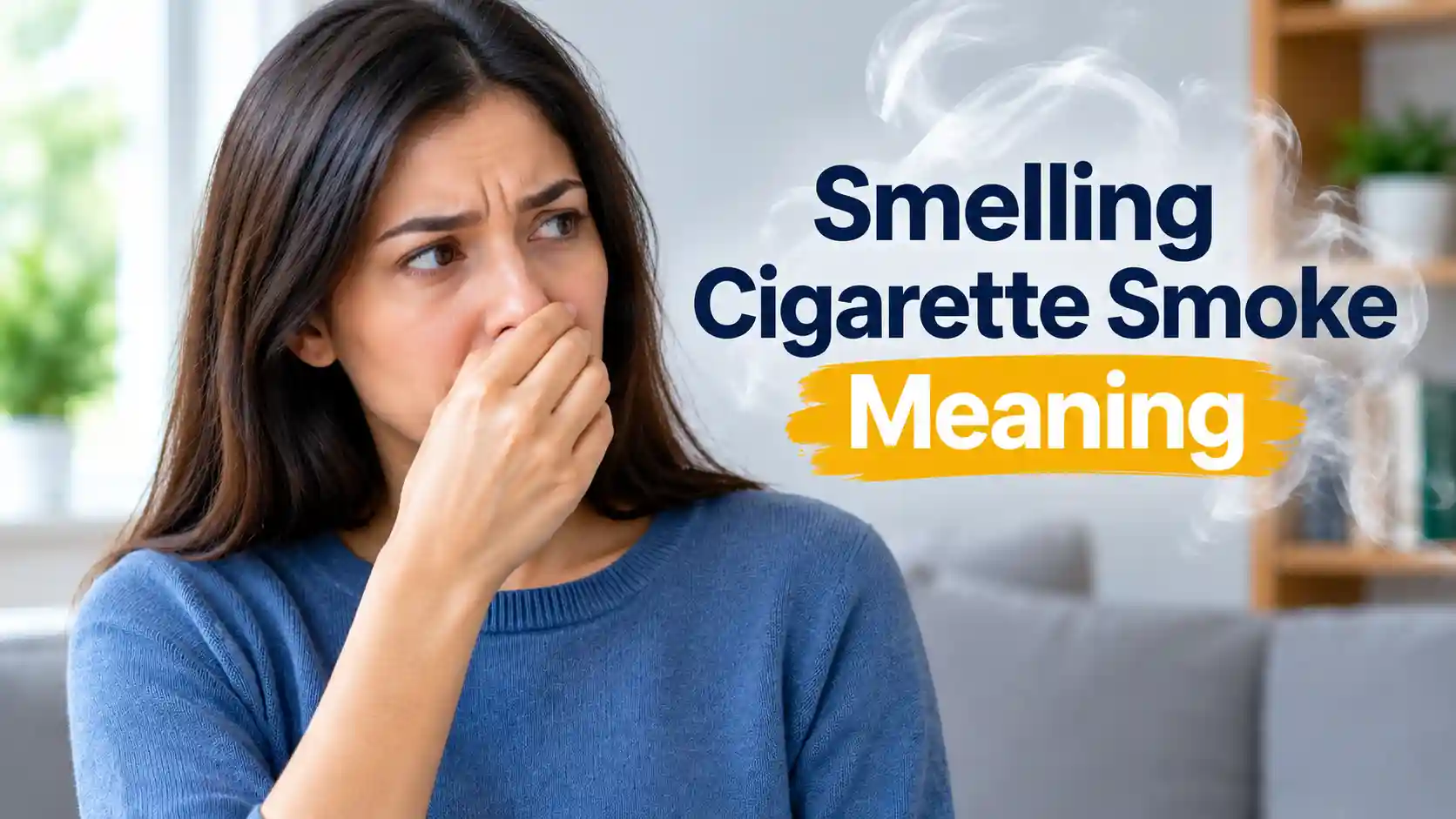
Have you ever suddenly noticed the smell of cigarette smoke when nobody nearby was smoking? The smelling cigarette smoke meaning can be simple: there may be a real source you have not found.
But if the smell is not actually present, it can be a type of smell disorder called phantosmia, which means sensing an odor that is not in the environment.
This can happen for several reasons, including a cold, sinus problems, allergies, migraines, certain medicines, smoking, or changes in the sense of smell after an infection. Rarely, phantom smells can be linked with neurological conditions.
In this guide, you will learn what smelling cigarette smoke can mean, common causes, when it may need medical attention, and how doctors may investigate it.
Quick Answer: What Does Smelling Cigarette Smoke Mean?
If you smell cigarette smoke and there is a real source nearby, the explanation may be environmental. Smoke can also remain on clothes, furniture, cars, walls, or other surfaces after someone has smoked.
If you cannot find any source and other people cannot smell it, the experience may be phantosmia. This is when the brain and smell system detect an odor that is not actually present. Tobacco smoke is one of the odors people can experience with phantosmia.
Phantosmia does not automatically mean something serious is wrong. Common causes include colds, sinus infections, allergies, nasal polyps, migraines, dental problems, certain medicines, and recent respiratory infections.
| What you notice | Possible explanation |
| Everyone smells the smoke | There may be a real source |
| Only you smell it briefly | A phantom smell is one possibility |
| It happens during a cold | Nasal or sinus changes may play a role |
| It happens repeatedly | A healthcare evaluation may be useful |
| It comes with neurological symptoms | Prompt medical attention may be needed |
What Is the Medical Meaning of Smelling Cigarette Smoke?

The medical term most often connected with smelling an odor that is not there is phantosmia. It is sometimes described as an olfactory hallucination or phantom smell.
Your sense of smell depends on a system that includes receptors in the nose, nerves, and areas of the brain that process odors. If something changes in this system, you may notice smells differently.
Phantosmia can involve many different odors. Some people report unpleasant smells such as smoke, chemicals, burning materials, garbage, or rotten food. The smell may affect one nostril or both, and it can come and go or remain for longer periods.
There is another condition called parosmia. The difference is important. With phantosmia, you smell something that is not there. With parosmia, something that really exists smells different from how it normally smells.
| Term | Simple meaning | Example |
| Phantosmia | Smelling something that is not there | Smelling cigarette smoke in an empty room |
| Parosmia | A real smell seems changed | Coffee suddenly smells like chemicals |
| Hyposmia | Reduced ability to smell | Smells seem much weaker |
| Anosmia | Loss of smell | You cannot smell odors |
Understanding this difference can make it easier to describe the problem to a healthcare professional.
Why Do I Smell Cigarette Smoke When There Is None?
There is no single explanation for phantom cigarette smoke. Several conditions can affect the smell system.
A cold, flu, or other upper respiratory infection can temporarily change how you smell. COVID-19 can also cause changes in smell.
Sinus problems and allergies are another possibility. Inflammation, congestion, or nasal growths such as polyps can affect the way odors are detected and processed.
Migraines can also be associated with changes in smell. Some people notice unusual sensory experiences around migraine episodes.
Certain medications may affect smell as well. If the symptom began after starting or changing a medicine, tell your healthcare professional rather than stopping the medicine on your own.
Dental problems, smoking, chemical exposure, and previous head injuries can also affect smell perception.
Most importantly, smelling cigarette smoke by itself does not tell you which cause is responsible. A proper evaluation is needed when symptoms continue or concern you.
Can Smelling Cigarette Smoke Be Caused by Sinus Problems?
Yes. Sinus and nasal problems are among the possible causes of changes in smell.
When the nose or sinuses become inflamed, the normal smell pathway can be affected. Colds, sinus infections, allergies, and nasal polyps are all linked with smell changes.
For example, imagine that you recently had a bad cold. Your nose remains blocked, and you occasionally notice a strange smoky smell. This could be related to changes in your smell system during or after the illness.
The NHS notes that smell changes from conditions such as colds, flu, COVID-19, sinusitis, and allergies often improve over time.
If nasal symptoms continue, a healthcare professional can check your nose and sinuses and determine If further evaluation is needed.
Do not assume that every phantom cigarette smell comes from a sinus problem, though. Other causes are possible.
Can a Phantom Cigarette Smell Be Related to a Migraine or Seizure?
Yes, unusual smells can sometimes occur with neurological conditions, although this does not mean that a cigarette smell automatically indicates one.
The Mayo Clinic lists temporal lobe seizures among possible causes of phantosmia. The Epilepsy Foundation also explains that some focal seizures can begin with an unusual smell or another sensory change called an aura.
A smell-related seizure aura may happen briefly and may occur in a similar way each time. Other symptoms can occur too, such as déjà vu, unusual feelings, nausea, confusion, or changes in awareness.
This is different from saying that smelling smoke means you have epilepsy. There are many much more common explanations for changes in smell, including respiratory infections and sinus conditions.
If the episodes are repeated, sudden, brief, and occur with other unusual neurological symptoms, tell a healthcare professional. Keeping track of when they happen and what occurs at the same time can be helpful.
Is Smelling Cigarette Smoke a Sign of a Serious Problem?

Usually, a phantom smell does not mean that you have a serious disease. Many causes are temporary or treatable. Cleveland Clinic notes that phantosmia often goes away over time, especially when the underlying cause improves.
However, persistent or unexplained smell changes deserve attention. Less common causes can include neurological disorders, head injury, and other conditions affecting the brain or smell system.
The key is not to jump from one symptom to the worst possible explanation.
Instead, consider the pattern:
| Pattern | What to do |
| One brief episode | Check the environment and monitor it |
| Started during a cold or allergy flare | Discuss it if it continues |
| Keeps happening for weeks | Arrange a medical evaluation |
| Happens with unusual neurological symptoms | Contact a healthcare professional promptly |
| Happens with sudden stroke symptoms | Seek emergency medical help |
If you suddenly develop facial weakness, weakness or numbness on one side, trouble speaking, confusion, trouble seeing, severe dizziness, or a sudden severe headache, call 911. These are recognized stroke warning signs.
What Should You Do If You Keep Smelling Cigarette Smoke?
Start with the simplest explanation: make sure there is no actual smoke.
Check nearby rooms, outdoor areas, clothing, vehicles, vents, furniture, and other possible sources. If you live with other people, ask If they can smell it too.
If nobody else can smell it and the experience keeps returning, write down a few details. Note when it happens, how long it lasts, If it affects one or both nostrils, and If you have congestion, headaches, nausea, dizziness, or other symptoms.
Also consider recent changes in your health. A recent cold, flu, COVID-19 infection, sinus problem, allergy flare, head injury, medication change, or smoking habit may be useful information for your healthcare professional.
A doctor may examine your nose, ears, head, and neck. Depending on your symptoms, further testing may include a nasal examination, imaging such as CT or MRI, or an EEG when a neurological cause is suspected.
Do not stop prescription medicine simply because you suspect it may affect your sense of smell. Discuss medication concerns with the prescribing professional.
When Should You Talk to a Doctor About Smelling Smoke?

A healthcare professional can help when the symptom is persistent, repeated, unexplained, or affecting your daily life.
Cleveland Clinic recommends contacting a healthcare provider when phantom smells last for more than a few weeks. Other guidance notes that persistent changes in smell should be assessed, especially when they do not improve after an illness.
You should also mention the symptom if you have recently experienced a head injury or have other changes in your sense of smell.
When you make an appointment, useful information includes:
- When the smell first started.
- How often it happens.
- How long each episode lasts.
- If anyone else can smell it.
- If it happens in one nostril or both.
- If you recently had a cold, flu, COVID-19, allergy, or sinus problem.
- Any recent medication changes.
- Any headaches or other unusual symptoms.
These details can help your healthcare professional understand the pattern.
FAQs
What does smelling cigarette smoke when nobody is smoking mean?
It may mean you are experiencing phantosmia, a condition in which you detect a smell that is not actually present. Several causes are possible, including infections, sinus problems, allergies, migraines, medications, and neurological conditions.
Is smelling cigarette smoke a sign of a brain problem?
Not necessarily. Many common conditions can cause phantom smells. However, neurological conditions can sometimes cause unusual smells, so repeated or unexplained episodes should be discussed with a healthcare professional.
Can a sinus infection make you smell cigarette smoke?
It can contribute to changes in smell. Sinus infections and other nasal conditions are recognized causes of smell disorders, including phantosmia.
Can anxiety cause you to smell cigarette smoke?
A phantom smell has many possible causes, so it is not accurate to assume anxiety is responsible without an evaluation. If the smell keeps returning, discuss it with a healthcare professional.
How long does phantom cigarette smell last?
It varies. Some cases improve when an underlying cold, infection, or other problem improves. Other cases can last longer, depending on the cause.
When is smelling smoke an emergency?
The smell itself does not automatically mean an emergency. However, seek emergency help if it occurs along with sudden weakness or numbness, facial drooping, trouble speaking, severe confusion, sudden vision problems, severe dizziness, or a sudden severe headache. These can be stroke warning signs.
Conclusion
The smelling cigarette smoke meaning can vary widely. Sometimes there is a real source that is difficult to notice. When no smoke is present, the experience may be phantosmia, a smell disorder in which you detect an odor that does not exist in your surroundings.
Common causes include colds, sinus infections, allergies, migraines, certain medicines, smoking, and other changes affecting the smell system.
Less common neurological causes are also possible, which is why repeated or persistent symptoms should not simply be ignored.
The best approach is to look for a real source first, notice when the episodes occur, and speak with a healthcare professional if they continue.
And if unusual smell occurs with sudden stroke warning signs, seek emergency care right away.

Ali Sher is a writer and the creator of Factnora.com, a website dedicated to sharing fascinating facts, biographies, history, and useful knowledge. He enjoys researching interesting topics and turning them into simple, engaging stories for readers. Through factnora, Muhammad aims to provide informative content that is easy to understand, enjoyable to read, and worth sharing.