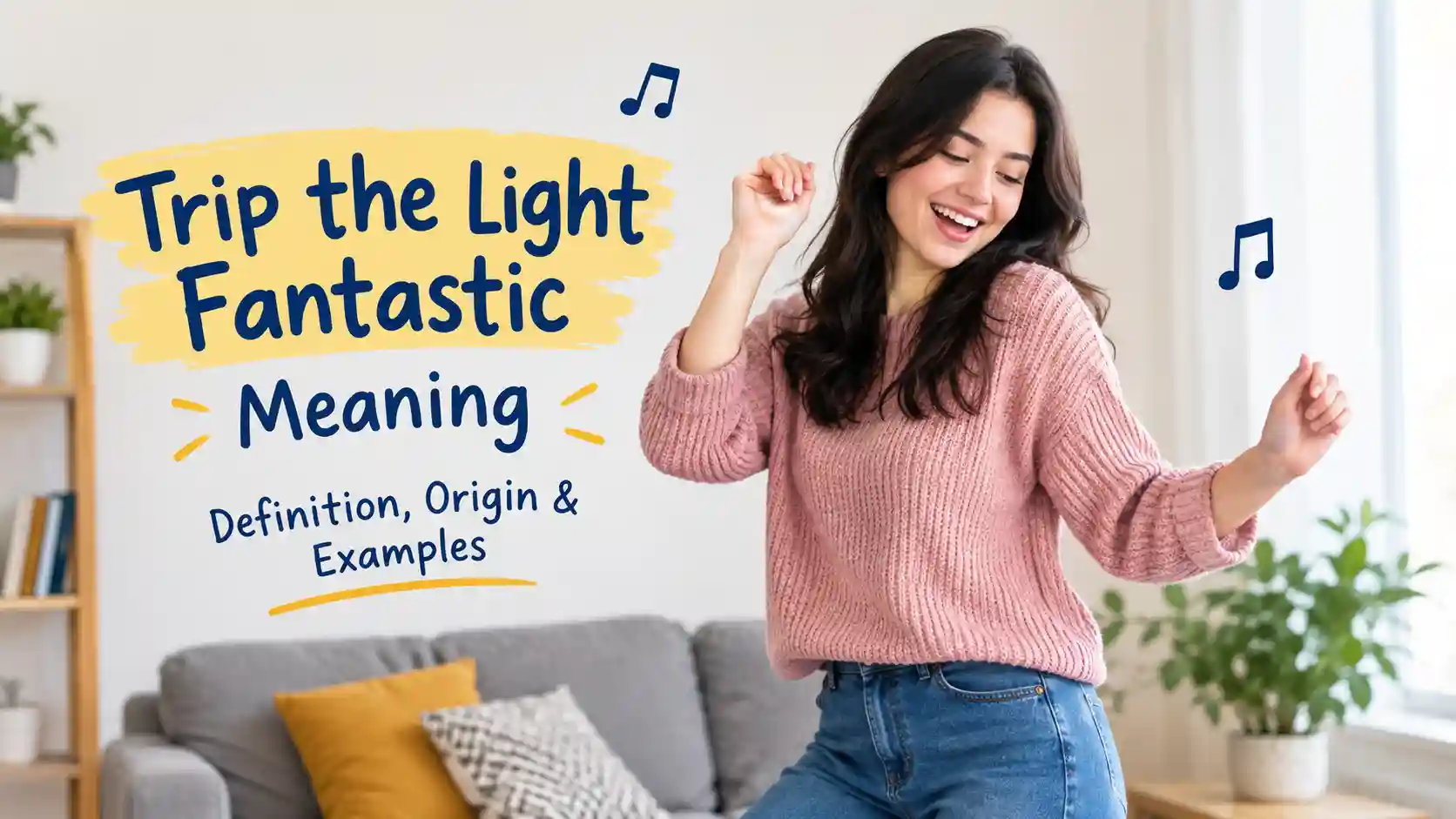
The trip the light fantastic meaning is simple: it means to dance, especially in a light, lively, or graceful way. The phrase sounds strange because the word trip once had a different meaning.
Today, trip the light fantastic is an old-fashioned and playful way to say go dancing. You may see it in books, songs, movies, or humorous writing rather than in everyday conversation.
The phrase has a long literary history. It comes from the English poet John Milton and his poem L’Allegro. Milton wrote about someone moving on the light fantastic toe, creating a colorful picture of graceful dancing.
In this article, you will learn what the phrase means, where it came from, how trip came to mean dance, how to use the expression, and why it sounds unusual to modern English speakers.
Quick Answer:
Trip the light fantastic means to dance or go dancing, usually in a lively, graceful, or playful way.
For example:
After dinner, everyone went outside to trip the light fantastic.
This simply means that everyone went outside to dance.
The phrase is usually humorous, poetic, or old-fashioned. If someone says, Are you ready to trip the light fantastic? they are probably asking, Are you ready to dance?
The word trip is the part that causes the most confusion. Today, trip often means to stumble or fall because your foot catches on something. But in this older expression, trip means to move with light, quick steps or dance.
| Phrase | Simple Meaning |
| Trip the light fantastic | Dance |
| Trip it | Move or dance lightly |
| Tripping the light fantastic | Dancing |
| Tripped the light fantastic | Danced |
| Light fantastic toe | A poetic image of a dancer’s foot |
So, if you see this expression in a story, you usually do not need to imagine someone falling. Imagine someone dancing instead.
Trip the Light Fantastic Meaning in Simple English
In simple English, trip the light fantastic means to dance in a light, graceful, or joyful way.
The phrase can describe many kinds of dancing. It does not refer to one specific dance.
For example, a couple at a wedding might dance slowly together. Someone at a party might dance energetically to music. A group of friends might dance around at a celebration.
All of these situations could be described with the phrase.
The expression often has a playful tone. Someone might use it instead of simply saying dance because they want their sentence to sound colorful or humorous.
For example:
Simple:
We went dancing after dinner.
More playful:
We went to trip the light fantastic after dinner.
Both sentences have basically the same idea, but the second one sounds much more literary.
Collins describes the phrase as an old-fashioned or joking way of referring to ballroom dancing and also gives the broader meaning to go dancing.
Where Did Trip the Light Fantastic Come From?
The phrase comes from the work of John Milton, one of the most important English poets of the 17th century.
Milton used the wording in his poem L’Allegro. The poem includes the famous lines:
Come, and trip it as ye go / On the light fantastic toe
The lines appear in the poem as part of an invitation to Mirth, a figure connected with joy and happiness.
The important detail is that Milton was not using trip in the modern sense of stumbling.
He was using an older meaning connected with moving lightly and nimbly. Sources on the phrase trace this older dancing sense of trip back centuries before Milton.
The original wording also helps explain why the modern phrase can sound incomplete.
Milton wrote about the light fantastic toe. Over time, the expression was shortened, leaving us with trip the light fantastic.
That shortened form can sound mysterious because the light fantastic does not clearly name an object. Understanding Milton’s original wording makes the expression much easier to understand.
Why Does Trip Mean Dance?
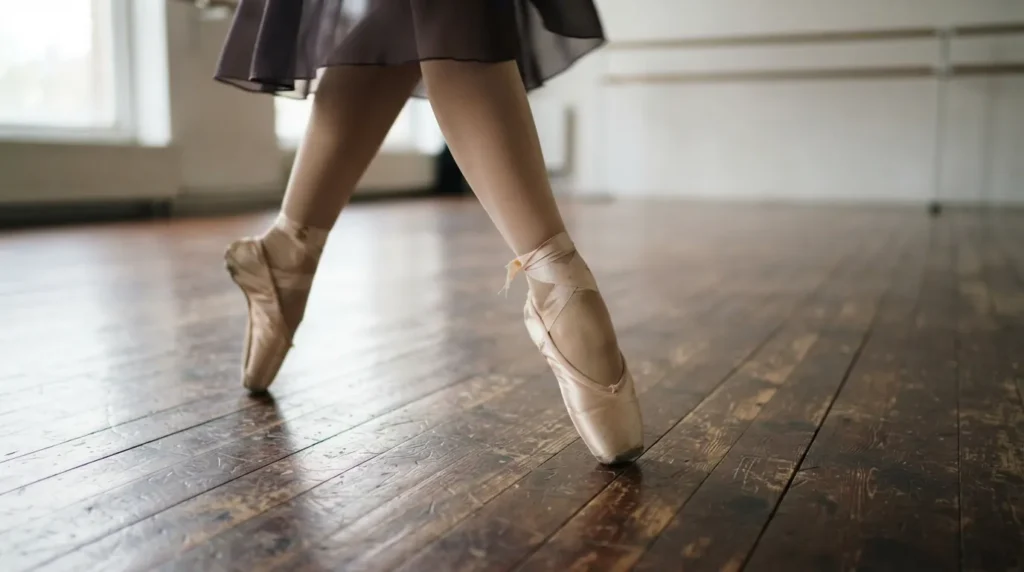
Modern readers usually connect trip with falling or stumbling.
For example, you might say:
I tripped over the step.
But English words can change meaning over time. The verb trip once had a sense connected with moving lightly or nimbly, including dancing. That older meaning is preserved in the phrase trip the light fantastic.
This is why the expression can be confusing.
A modern reader might imagine someone walking across a dance floor and suddenly falling. Milton’s readers would have understood trip differently in this context.
The old meaning is closer to step lightly, move quickly, or dance.
That gives us a useful way to understand the phrase:
Trip = move lightly
Light = light-footed
Fantastic = imaginative or fanciful
Toe = the dancer’s foot
Put those ideas together, and Milton creates an image of someone dancing lightly and freely.
| Word or Part | Meaning in the Original Idea |
| Trip | Move or dance lightly |
| Light | Light-footed or nimble |
| Fantastic | Imaginative or fanciful |
| Toe | The dancer’s foot |
| Whole expression | Dance in a light, graceful way |
The Original Light Fantastic Toe Explained
The word toe is important because it makes the original phrase easier to understand.
Milton did not simply write trip the light fantastic. He wrote about someone who would trip it on the light fantastic toe.
In other words, the toe belongs to the dancer.
The toe is light because the dancer moves lightly. It is fantastic because the movement is fanciful, lively, or imaginative.
Over time, people began using shorter versions of the expression. The word toe disappeared, but the idea of dancing remained.
This is one reason the modern expression can seem almost like a puzzle.
If you only look at the modern words, trip the light fantastic does not sound like a normal sentence. But once you know its literary history, the meaning becomes much clearer.
How to Use Trip the Light Fantastic in a Sentence
The phrase can be used as a verb phrase.
You can say that someone trips the light fantastic, tripped the light fantastic, or is tripping the light fantastic.
For example:
After the wedding dinner, the couple tripped the light fantastic.
This means they danced.
You could also say:
Everyone was ready to trip the light fantastic at the party.
This means everyone was ready to dance.
Another example is:
Grandpa still loves to trip the light fantastic at family weddings.
Here, the expression adds a playful and slightly humorous tone.
The phrase is most natural when talking about dancing at parties, weddings, balls, celebrations, or other social events.
| Sentence | Meaning |
| Let’s trip the light fantastic. | Let’s dance. |
| They tripped the light fantastic. | They danced. |
| She was tripping the light fantastic. | She was dancing. |
| He loves to trip the light fantastic. | He loves to dance. |
| They went out to trip the light fantastic. | They went out to dance. |
Is Trip the Light Fantastic Still Used Today?
Yes, but it is not a common everyday expression.
Most people today would simply say dance or go dancing. The longer phrase sounds old-fashioned, poetic, humorous, or playful.
For example, at a normal party, someone is much more likely to say:
Let’s dance!
than:
Let’s trip the light fantastic!
The second sentence may make people smile because it sounds unusually formal or literary.
Collins labels the expression as old and facetious, while other language references describe it as less common in modern speech.
You are more likely to encounter it in:
- Books
- Newspaper writing
- Humor
- Songs
- Movie dialogue
- Literary references
- Descriptions of formal dancing
- Playful conversations
It can still be understood, but it is not the normal modern way to talk about dancing.
Trip the Light Fantastic vs. Simply Dance
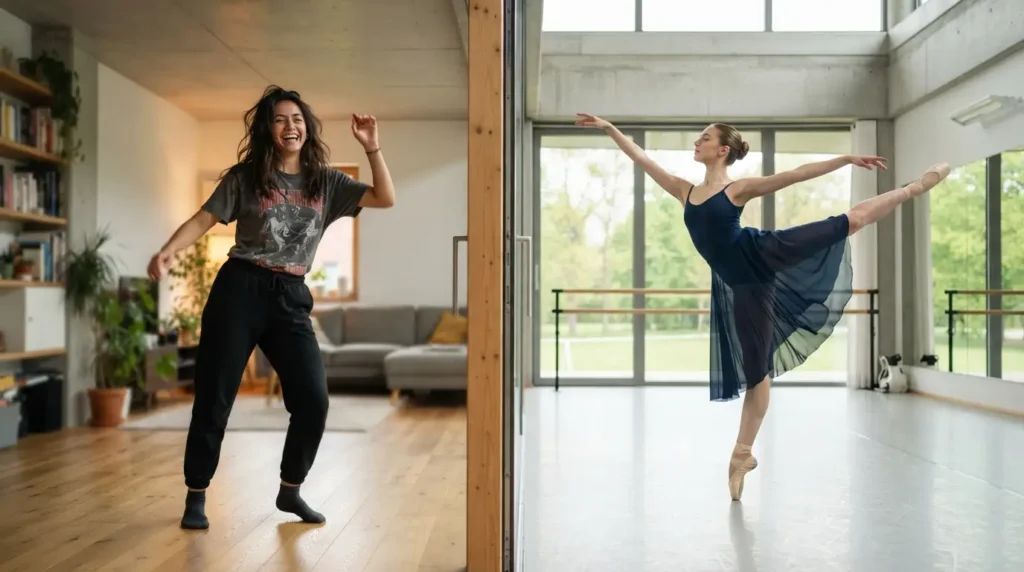
The two expressions have the same basic meaning, but their tone is different.
Dance is direct and common. It works in almost every situation.
Trip the light fantastic is more colorful and unusual. It can make writing sound playful or old-fashioned.
Compare these examples:
I danced with my wife at the wedding.
I tripped the light fantastic with my wife at the wedding.
The first sentence is plain and natural. The second has a more humorous and literary feel.
This makes the idiom useful when a writer wants to add personality to a sentence.
It is especially effective when the surrounding writing already has a playful or old-fashioned style.
Common Mistakes About the Phrase
One common mistake is thinking that trip means to fall.
That is not the meaning in this idiom. Here, trip has its older sense of moving lightly or dancing.
Another mistake is assuming that light fantastic is the name of a particular dance.
It is not. Milton’s original wording describes the dancer’s light, fanciful footwork. Dictionary.com specifically notes that fantastick was not the name of a particular dance.
Some people also think the phrase must refer to elegant ballroom dancing only. While ballroom dancing is strongly associated with the expression, the general meaning is simply to dance or go dancing.
Another mistake is using the phrase in every situation where someone moves their feet. It specifically has a connection to dancing, so it would sound strange to use it for ordinary walking.
For example, this would be unusual:
John tripped the light fantastic while walking to the grocery store.
Unless John was actually dancing on the way there, the phrase would not make sense.
Real-Life Examples of Trip the Light Fantastic
Imagine a couple attending a wedding. After dinner, the music begins and they walk onto the dance floor.
You could say:
After dinner, the newlyweds tripped the light fantastic.
The meaning is simply that they danced.
Now imagine a birthday party where an older relative suddenly starts dancing.
Someone might jokingly say:
Grandma is ready to trip the light fantastic!
Again, the meaning is that she is ready to dance.
The expression can also describe a larger group.
By midnight, the whole party was tripping the light fantastic.
This means that many people were dancing.
It can even be used in a nostalgic sentence:
When I was young, my parents loved to trip the light fantastic at weekend dances.
Here, the phrase gives the sentence an older, nostalgic feeling.
Trip the Light Fantastic in American English
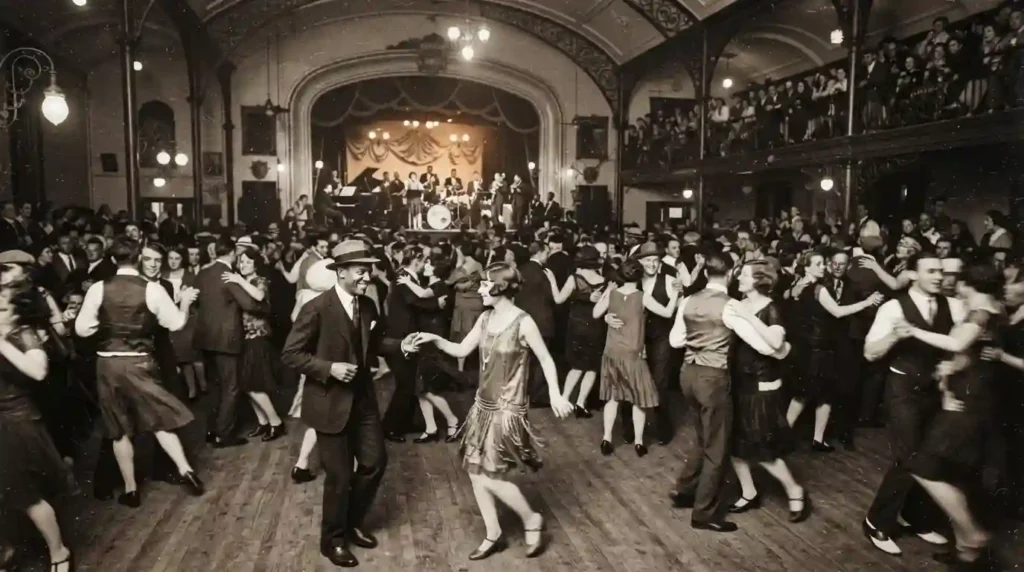
The expression is well known in American English, although it is not a common everyday phrase.
Its history in American popular culture helped keep it familiar. One important example is the 1894 song The Sidewalks of New York, which used the phrase in the line about people dancing on the sidewalks of New York.
That popular use helped move the expression beyond its original literary setting.
Today, an American reader may recognize trip the light fantastic even if they rarely use it.
The phrase therefore has an interesting life cycle. It began in English poetry, became a familiar way to describe dancing, appeared in popular culture, and eventually became a somewhat old-fashioned idiom.
Similar Expressions That Mean Dance
English has many ways to describe dancing.
Some are direct, while others are playful or informal.
| Expression | Meaning | Tone |
| Dance | Move to music | Neutral |
| Go dancing | Go somewhere to dance | Neutral |
| Hit the dance floor | Start dancing | Casual |
| Cut a rug | Dance | Informal/playful |
| Trip the light fantastic | Dance | Literary/playful |
| Bust a move | Dance or make a dance move | Casual |
Trip the light fantastic stands out because of its poetic history.
If you want simple modern English, dance is usually the best choice.
If you want a sentence with personality, humor, or an old-fashioned touch, trip the light fantastic can be a fun choice.
When Should You Use Trip the Light Fantastic?
Use the expression when you want to talk about dancing in a playful, colorful, or slightly old-fashioned way.
It works especially well in creative writing.
For example:
After years of sitting on the sidelines, she finally decided to trip the light fantastic.
It can also work in casual humor:
I may not know the steps, but I’m ready to trip the light fantastic.
However, avoid using it when you need extremely clear or formal language.
If you are writing instructions for a dance class, for example, dance is much clearer.
If you are writing a fun article, story, caption, or conversation, the idiom may fit nicely.
The key is understanding its tone. The phrase is not wrong or outdated to the point of being meaningless. It is simply less common and more playful than ordinary words like dance.
FAQs
What does trip the light fantastic mean?
It means to dance or go dancing, especially in a light, graceful, lively, or playful way.
Where did trip the light fantastic come from?
The phrase comes from John Milton’s poem L’Allegro. Milton wrote about trip[ping] it on the light fantastic toe.
Does trip mean fall in this phrase?
No. In this expression, trip has an older meaning connected with moving lightly or dancing.
Is trip the light fantastic still used today?
Yes, but it is not common everyday English. It is often used in humorous, literary, or old-fashioned contexts.
Can trip the light fantastic describe any type of dance?
Generally, yes. The expression means to dance and does not name one specific dance. It has historically been associated with ballroom and social dancing.
What is a simple modern replacement for trip the light fantastic?
The simplest replacement is dance or go dancing. These phrases are much more common in modern English.
Conclusion:
The trip the light fantastic meaning is simply to dance, especially in a light, graceful, lively, or playful way. Although the expression sounds strange today, its history explains why the words fit together.
The phrase comes from John Milton’s L’Allegro, where he wrote about moving on the light fantastic toe. In that older use, trip meant to move lightly or dance rather than stumble.
Today, trip the light fantastic is mostly a playful or literary way to say dance. It is less common than ordinary words such as dance or go dancing, but it remains a colorful part of English.
So the next time you see someone say they are going to trip the light fantastic, picture them stepping onto a dance floor not tripping and falling. The phrase is simply an old, poetic way of saying Let’s dance.

Muhammad Haroon is the founder and writer behind Factnora.com, a platform focused on sharing interesting, useful, and reliable information. His work covers biographies, history, facts, and stories that help readers discover something new in a simple and engaging way. Through factnora, Muhammad aims to make learning enjoyable while presenting information in a clear and reader-friendly style.