If you are searching for ex parte order meaning, you may have seen the term on a court paper and wondered what it means for you. In simple terms, an ex parte order is a court order made after a request from one side, often without the other side getting advance notice or a chance to respond first.
These orders are usually connected to urgent situations where waiting for a normal hearing could cause serious harm.
However, an ex parte order does not always mean the other side loses the case. In many situations, the order is temporary and is followed by a hearing where both sides can speak.
This guide explains what an ex parte order means, why a judge may issue one, how it differs from other court orders, what happens after it is issued, and what someone should do after receiving one.
Quick Answer
An ex parte order is a court order issued after one party asks the court for relief without giving the other party advance notice or an opportunity to respond before the order is made. The United States Courts describes an ex parte proceeding as one brought before a court by one party without notice to or challenge by the other side.
Courts generally use this type of procedure only when the situation is urgent or when giving advance notice could cause the requested protection to become ineffective.
For example, a person may ask a court for immediate protection because they believe waiting for a regular hearing could result in immediate harm. Depending on the law and facts, a judge may issue a temporary order and then schedule a hearing.
An ex parte order is therefore not automatically a final decision about the entire case. Its effect, duration, and purpose depend on the type of case and the law of the court handling it.
What Does Ex Parte Order Mean?
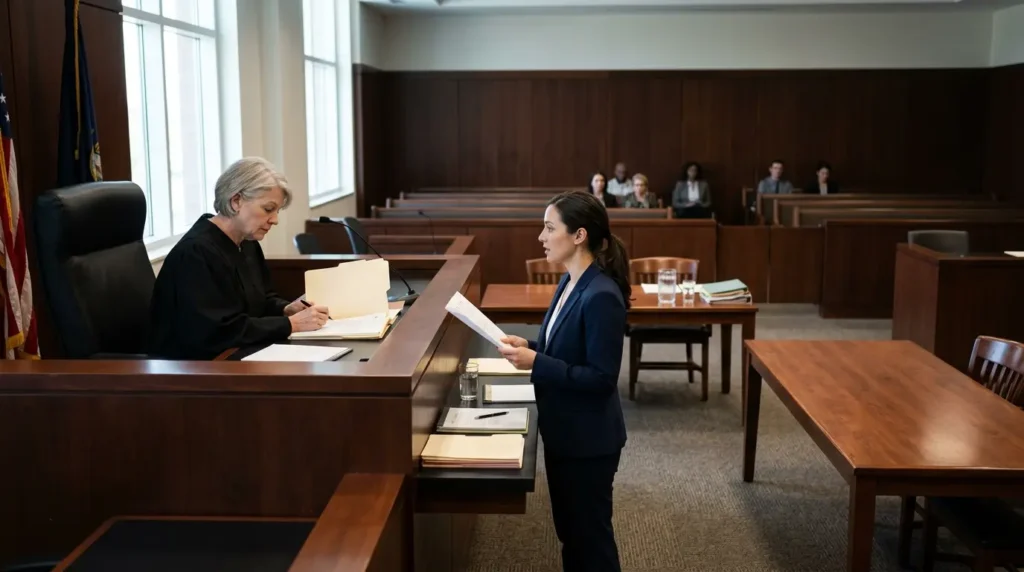
The phrase ex parte comes from Latin and means roughly “from one party.” In legal use, it describes a proceeding, request, communication, or application involving one side without the normal participation of the other side.
An ex parte order happens when a judge considers a request from one party without first giving the opposing party the normal opportunity to appear and respond.
This may sound unfair at first. The reason courts allow limited ex parte procedures is that some emergencies require quick action. If the court had to wait for ordinary notice and a full hearing, the harm that the applicant is trying to prevent might happen before the judge could act.
The important point is that ex parte does not mean the judge automatically believes everything one party says. The judge must apply the legal standard required for that type of request.
Courts are also cautious about ex parte relief because the normal legal process generally includes notice and an opportunity to be heard. Cornell Law School’s Legal Information Institute explains that ex parte relief can raise due-process concerns, which is one reason these procedures are limited.
| Term | Simple meaning |
| Ex parte | Involving one side without the other side participating at that stage |
| Ex parte order | An order made after one side asks the court for relief without normal advance notice |
| Hearing | A court proceeding where parties can present arguments or evidence |
| Notice | Information given to a party about a court proceeding or request |
| Temporary order | An order that normally lasts for a limited period or until another court event |
Why Would a Court Issue an Ex Parte Order?
The main reason is urgency.
A court may allow an ex parte request when waiting for normal notice could lead to serious or immediate harm. The exact requirements vary depending on the type of case, the state or federal court, and the law involved.
One common example is a request for a temporary restraining order. Under Federal Rule of Civil Procedure 65, a federal court can issue a temporary restraining order without notice only when specific facts show that immediate and irreparable injury will occur before the other party can be heard. The requesting attorney must also explain efforts made to provide notice and why notice should not be required.
Imagine that someone believes another person is about to take an action that could cause serious harm before a normal hearing can happen. If advance notice would give the other person time to complete that action, the applicant might ask the court for temporary relief without notice.
The judge then decides If the legal requirements for that type of emergency order have been met.
This is different from simply asking a judge to rule because one party wants a faster answer. Emergency relief normally requires a legally recognized reason for skipping the usual process.
What Is an Ex Parte Order Used For?
Ex parte procedures can appear in different areas of law. The exact rules depend heavily on the jurisdiction and type of case.
One familiar use is a temporary restraining order. A TRO can be used to temporarily prevent certain conduct while the court moves toward a fuller hearing. Cornell’s Legal Information Institute describes TROs as short-term injunctions intended to provide temporary protection until a more lasting court decision can be considered.
Other legal situations may also involve ex parte requests. These can include certain emergency requests involving property, evidence, protective measures, or other forms of immediate relief.
However, there is no single rule saying that every court must handle every ex parte request in the same way.
| Situation | Why an ex parte request might be considered |
| Immediate risk of harm | Waiting for a normal hearing could allow serious harm to occur |
| Emergency protective relief | Immediate temporary protection may be needed |
| Risk that property or evidence will be moved | Advance notice could make the requested relief ineffective |
| Certain specialized proceedings | A statute or court rule may specifically allow a no-notice procedure |
The table gives general examples, not a list of situations where an ex parte order is always available. Local law controls.
Ex Parte Order vs. Regular Court Order

The biggest difference is usually notice and participation.
In a normal contested court proceeding, both sides generally have an opportunity to receive notice and present their arguments before the judge makes a decision. An ex parte procedure can happen before the opposing side has that opportunity.
That does not necessarily mean the other party will never get a chance to respond. In many situations, the court provides a later hearing or another procedure where the affected party can challenge, modify, or oppose the order.
For example, Federal Rule of Civil Procedure 65 allows a temporary restraining order to be issued without notice under narrow conditions. The rule also provides procedures for a later hearing and allows the affected party to seek dissolution or modification of the order.
This makes an ex parte order different from a final judgment.
A judge issuing temporary emergency relief is not necessarily deciding every issue in the underlying lawsuit. The court may simply be trying to preserve the situation until the parties can be heard more fully.
How Long Does an Ex Parte Order Last?
There is no single answer because the length depends on the type of order and the applicable law.
Some ex parte orders are designed to last only for a short time. Others may remain in effect until a scheduled hearing or another court order changes them.
For example, in federal civil cases, Rule 65 says that a temporary restraining order issued without notice generally expires at the time set by the court, which cannot exceed 14 days unless the rule’s requirements for an extension are met or the opposing party agrees to a longer extension.
State courts can have different rules.
This is why you should read the actual order carefully. Look for language stating the expiration date, hearing date, restrictions, and instructions for responding.
If the document does not make the timing clear, getting advice from a lawyer or contacting the court clerk about procedural information may help you understand what happens next.
What Happens After an Ex Parte Order Is Issued?
Usually, the next step depends on the type of order.
If the order is temporary, the court may schedule a hearing where the other party can respond. The judge may then decide If to keep the order, change it, end it, or replace it with another type of order.
In federal civil cases involving a no-notice temporary restraining order, Rule 65 requires the preliminary-injunction hearing to be set as soon as possible. The opposing party can also seek to dissolve or modify the order under the rule.
This means receiving an ex parte order is not necessarily the end of the legal process.
A person affected by the order should pay attention to every date listed in the paperwork. Missing a hearing or failing to follow a court order can create additional legal problems.
The safest approach is to read the order carefully and determine exactly what it requires. If you do not understand the restrictions, ask a qualified attorney for advice about your particular situation.
What Should You Do If You Receive an Ex Parte Order?

First, read the entire order. Do not rely only on the first page or on what someone tells you it means.
Identify what the judge ordered, who must follow it, when it begins, when it ends, and If a hearing has been scheduled.
Second, follow the order unless and until a court changes it. Even if you believe the order was unfair or based on incorrect information, simply ignoring it may create additional legal consequences.
Third, check the paperwork for instructions about responding or attending a hearing. The opposing party may have a legal opportunity to challenge the order.
Fourth, consider speaking with a lawyer quickly. Ex parte matters can move quickly, and deadlines can be short.
If you cannot afford a private attorney, you can look for local legal aid organizations, a bar association referral service, or a court self-help center where available.
Remember that the exact procedure depends on your jurisdiction. A rule that applies in federal court may not be the same rule used in your state’s family, civil, or criminal courts.
Common Mistakes About Ex Parte Orders
One common mistake is thinking that ex parte means the judge has decided the whole case. Usually, that is not what the term means. It describes how a particular request or proceeding was handled.
Another mistake is assuming that every ex parte order is permanent. Many are temporary or designed to last only until another hearing or court decision.
Some people also believe that an ex parte order means the other party has no rights. That is generally too broad. Due-process concerns are one reason courts limit no-notice procedures and provide opportunities for affected parties to respond.
Another mistake is confusing an ex parte order with an ex parte communication.
An ex parte communication can mean an improper communication with a judge or decision-maker about a matter without the other side having notice or an opportunity to participate. Rules governing such communications can be strict, especially in administrative proceedings.
So, “ex parte order” and “ex parte communication” are related legal phrases, but they do not mean the same thing.
Real-Life Example of an Ex Parte Order
Suppose a person goes to court and asks for emergency temporary protection. The person tells the judge that waiting several days for a regular hearing could result in serious harm.
The judge reviews the request and the evidence submitted.
If the legal requirements are satisfied, the judge may issue a temporary order without first hearing from the other side. The order might restrict certain conduct until a hearing can take place.
The other person then receives notice of the order and the upcoming hearing. At the hearing, that person may have an opportunity to respond and present their side.
The judge can then decide If the temporary order should remain in place, be changed, or end.
This example shows why an ex parte order should not automatically be viewed as a final ruling. It may be an emergency step designed to provide short-term protection while the court prepares to hear both sides.
Is an Ex Parte Order the Same as a Restraining Order?
Not always.
An ex parte order describes how the order or proceeding was handled specifically, that one side asked the court for relief without the normal participation or notice of the other side at that stage.
A restraining order describes the type of relief being requested or imposed.
Some temporary restraining orders can be issued ex parte. Federal Rule 65 is one example of a rule that allows a temporary restraining order without notice when specific requirements are met.
So, the terms can overlap, but they are not interchangeable.
An order can also be called ex parte in a different legal setting without being a restraining order.
Does an Ex Parte Order Mean You Lost the Case?
No. An ex parte order does not automatically mean that the underlying case has been decided.
It may mean that the court granted temporary relief before hearing from the other side. The next step may be a hearing where both parties have an opportunity to present their positions.
The effect depends on the wording of the order and the law governing the case.
If you receive one, do not assume that you have no way to respond. Check the order for hearing dates, response deadlines, and instructions. Because court procedures vary, legal advice may be important when your rights, property, family relationships, or personal safety are involved.
FAQs
What does ex parte mean in simple words?
Ex parte means that a legal request or proceeding involves one side without the normal participation or advance notice of the other side at that stage.
Is an ex parte order permanent?
Not necessarily. Many ex parte orders are temporary and may remain in place only until a hearing or another court order. The exact duration depends on the applicable law and the wording of the order.
Can you fight an ex parte order?
In many situations, an affected party has a legal opportunity to challenge, modify, or end an ex parte order. The procedure and deadline depend on the type of order and jurisdiction.
Why would a judge issue an order without notice?
The main reason is usually urgency. For certain temporary restraining orders in federal court, the requesting party must show specific facts indicating that immediate and irreparable harm could occur before the other side can be heard.
Does an ex parte order mean the judge believes one side?
Not necessarily. The judge is deciding If the legal requirements for the requested emergency relief have been met based on the information available at that stage. A later hearing may allow both sides to present information.
What should I do after receiving an ex parte order?
Read the order carefully, follow its requirements, check all hearing dates and deadlines, and consider speaking with a qualified lawyer about your specific situation.
Conclusion
Understanding ex parte order meaning becomes easier when you remember one key idea: an ex parte order is generally connected to a court request made by one side without the other side receiving the normal opportunity to respond first.
Courts may allow this process when urgent action is legally justified, but it is usually subject to important limits.
An ex parte order does not automatically mean that the entire case has been decided. In many situations, a later hearing gives the affected party a chance to respond or ask the court to change or end the order.
If you receive an ex parte order, read it carefully and pay close attention to deadlines and hearing dates.
Do not ignore the order simply because you disagree with it. Because state and federal procedures can differ, a lawyer who understands the relevant court rules can help explain your specific rights and options.

Ali Sher is a writer and the creator of Factnora.com, a website dedicated to sharing fascinating facts, biographies, history, and useful knowledge. He enjoys researching interesting topics and turning them into simple, engaging stories for readers. Through factnora, Muhammad aims to provide informative content that is easy to understand, enjoyable to read, and worth sharing.