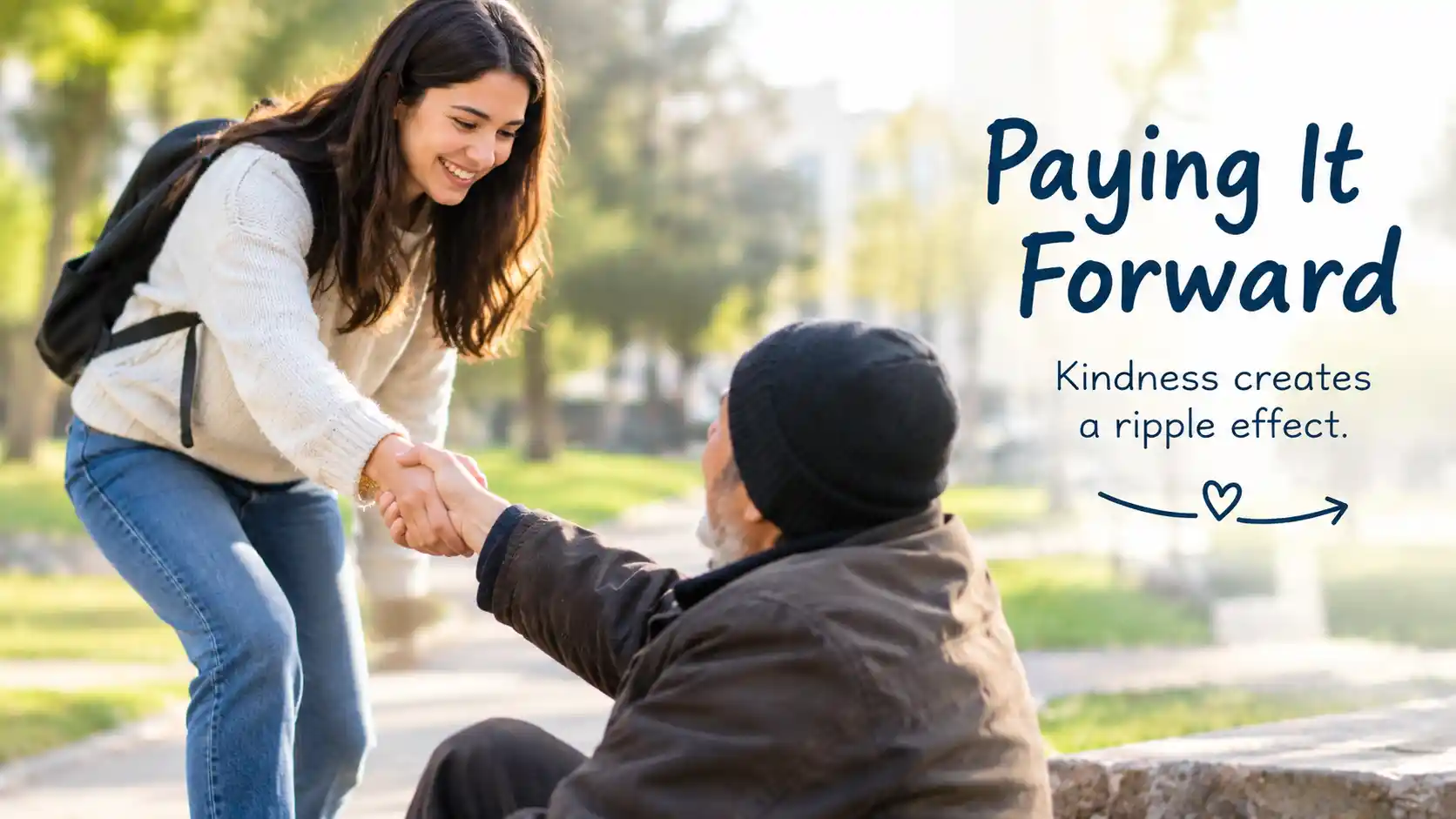
The paying it forward meaning is simple: when someone does something kind or helpful for you, you choose to help another person instead of repaying the original person directly.
It is a way of passing kindness from one person to another. For example, a stranger may buy your coffee, and instead of paying that person back, you might buy coffee for someone else.
The idea is often connected with generosity, kindness, gratitude, and helping others. In this article, you will learn what paying it forward means, how to use the phrase correctly, where the idea comes from, and what it looks like in everyday life.
Quick Answer: What Does Paying It Forward Mean?
Paying it forward means responding to someone’s kindness by doing something kind for another person rather than returning the favor to the person who helped you.
For example, imagine that someone pays for your meal when you are short on money. You thank them, but they tell you not to worry about paying them back. Later, you help someone else who needs a meal. That is paying it forward.
The phrase is based on a simple idea: kindness does not always have to travel backward. Instead of returning a favor to the person who helped you, you can pass that kindness to someone else.
| Phrase | Simple meaning |
| Paying it forward | Passing kindness to another person |
| Pay someone back | Return money, help, or a favor to the person who helped you |
| Return the favor | Do something helpful for the person who helped you |
| Pay it forward | Help someone else because you were helped |
The idea can involve money, time, advice, support, encouragement, or even a small act of kindness.
Paying It Forward Meaning and Definition
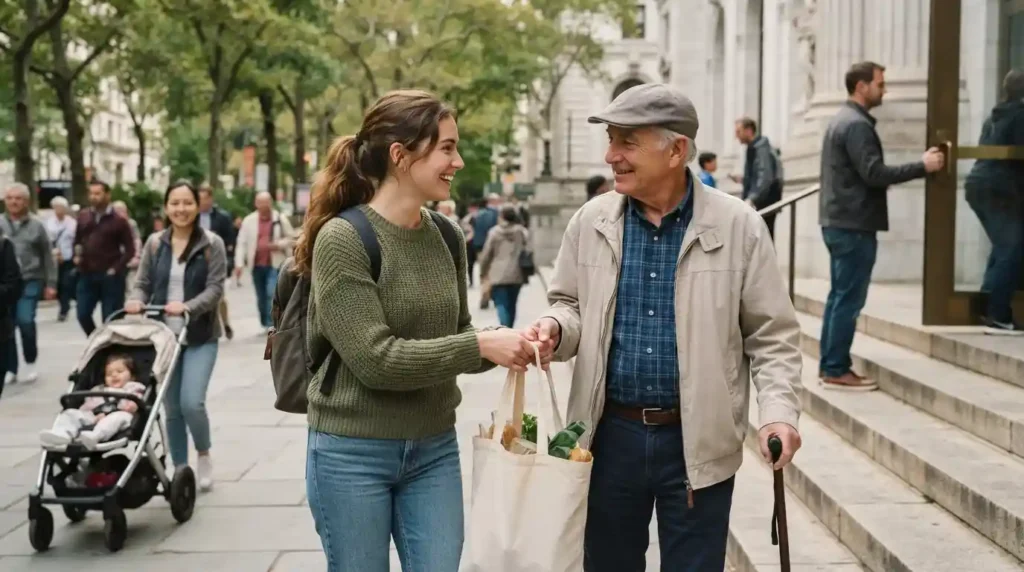
The paying it forward meaning is closely connected to kindness and generosity. When you pay something forward, you receive a benefit from one person and then give a similar benefit to someone else.
It does not mean that you must copy the exact favor you received. The important part is the intention to continue the kindness.
For example, suppose a teacher once gave you extra help when you were struggling with schoolwork. Years later, you become good at a subject and help a younger student understand it. You are not helping the original teacher, but you are continuing the helpful action.
Another example could happen at work. A coworker may help you learn a new task. Later, when another new employee joins the company, you take time to help them. That is another form of paying it forward.
The phrase can therefore describe both small and meaningful actions.
What Does It Mean to Pay It Forward in Everyday Life?
Paying it forward does not require a lot of money or effort. In many cases, it can be something very small.
You might let another driver merge into traffic because someone once gave you the same courtesy. You might share useful advice with a friend because someone once gave you good advice when you needed it.
Here are some common examples:
| Situation | A possible way to pay it forward |
| Someone buys your coffee | Buy coffee for another person |
| A friend helps you move | Help someone else with a difficult task |
| A teacher helps you succeed | Tutor another student |
| Someone gives you useful advice | Give helpful advice to someone who needs it |
| A stranger helps you during a difficult moment | Help another stranger later |
| Someone encourages you | Encourage another person |
The action can be simple. What matters is continuing the chain of kindness.
Paying It Forward vs. Paying Someone Back
These phrases sound similar, but they describe different actions.
Paying someone back usually means giving something directly to the person who helped you. If a friend lends you $20, you may pay your friend back by returning the $20.
Paying it forward, however, means helping someone else.
For example, imagine Sarah lends Mike $20 when he needs it. Mike later returns the $20 to Sarah. That is paying someone back.
Now imagine Sarah tells Mike he does not need to repay her. A few weeks later, Mike gives $20 to another person who needs help. That is paying it forward.
| Paying someone back | Paying it forward |
| Help goes back to the original person | Help goes to another person |
| Usually involves repaying a debt or favor | Usually involves continuing kindness |
| The original helper receives the benefit | A new person receives the benefit |
| Example: Returning borrowed money | Example: Helping someone else with money |
Both ideas can be positive, but they are not the same.
How to Use Paying It Forward Correctly
Paying it forward is a common English expression. It is often used when talking about kindness, generosity, favors, and positive actions.
You can use it in casual conversations, social media posts, workplace discussions, and personal stories.
For example:
Sarah helped me when I was having a hard time, so I want to pay it forward.
Another example is:
Someone paid for my lunch today, so I decided to pay it forward.
You can also use the phrase as a noun-like expression:
Paying it forward can make a small act of kindness grow.
The expression is usually understood without needing extra explanation because it is familiar to many English speakers.
Real-Life Examples of Paying It Forward
The best way to understand the phrase is to see it in realistic situations.
Imagine that you are standing in line at a coffee shop. The person ahead of you pays for your drink. Instead of asking who they are or trying to repay them, you decide to pay for the next customer’s drink. You have passed the kindness to someone else.
Or suppose a neighbor helps you shovel snow after a storm. A few days later, you notice another neighbor struggling with the same problem. You offer to help. You are continuing the spirit of the original favor.
Paying it forward can also happen online. Someone may freely share useful career advice with you. Later, you might answer another person’s question and share what you learned.
It can even happen through simple words. If someone gave you confidence during a difficult time, you may encourage another person who is feeling unsure about themselves.
These examples show that paying it forward is not limited to financial gifts.
Small Ways to Pay It Forward
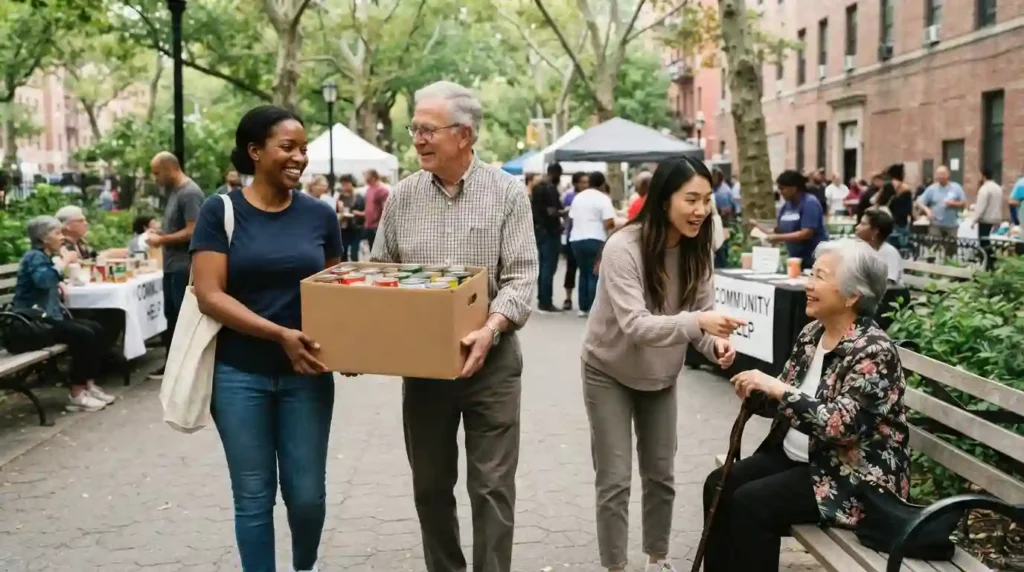
You do not need to wait for a major opportunity. Everyday moments can give you chances to help.
You could hold a door open for someone, give a sincere compliment, help a classmate understand a lesson, donate items you no longer need, or offer your time to someone who needs assistance.
You could also share something useful that you learned. If a friend helped you find a good resource, you can share that resource with another person.
Another easy approach is to notice when someone needs help. Instead of waiting for them to ask, you can offer assistance when appropriate.
| Simple action | Why it can matter |
| Give someone encouragement | It can make a difficult day easier |
| Share useful knowledge | It can help someone solve a problem |
| Volunteer your time | It supports a person or community |
| Donate unwanted items | Someone else may find them useful |
| Help a neighbor | It can strengthen community connections |
| Show patience | It can make an uncomfortable situation better |
The goal is not to make the action look impressive. A small kind act can still be meaningful.
Why Do People Pay It Forward?
People may pay it forward for many different reasons. Some want to show gratitude after receiving help. Others simply enjoy helping people.
For some, paying it forward is a way to turn a positive experience into another positive experience. A person who receives kindness may feel encouraged to offer kindness to someone else.
The idea can also create a sense of community. When people help each other, even through small actions, they can build stronger social connections.
However, paying it forward should not be treated as an obligation. You do not have to repay every act of kindness by immediately helping someone else. Sometimes saying thank you is enough.
The phrase is best understood as an invitation to continue kindness, not as a rule that creates a debt.
The Origin and Popularity of Pay It Forward

The idea of paying kindness forward existed in different forms before the modern phrase became widely popular.
The expression became especially well known through Catherine Ryan Hyde’s 1999 novel Pay It Forward. The story explores the idea of doing significant good deeds for other people rather than simply returning favors to the person who helped you.
The concept later became even more familiar through the 2000 film Pay It Forward, starring Kevin Spacey, Helen Hunt, and Haley Joel Osment.
The phrase is now commonly used outside the story itself. People use it to describe everyday acts of generosity, from buying someone’s coffee to volunteering or helping a stranger.
The exact history of the broader idea of passing kindness from one person to another is much older than the phrase’s modern popularity, so it is useful to separate the general concept from the later cultural popularity of the expression.
Common Mistakes About Paying It Forward
One common misunderstanding is thinking that paying it forward means you must give exactly what you received.
That is not necessary. If someone gives you $10, you do not have to give $10 to someone else. The value can be different.
Another mistake is thinking that paying it forward always involves money. It does not. Time, attention, knowledge, encouragement, and practical help can all be forms of kindness.
Some people also use pay it forward when they actually mean pay someone back. Remember the key difference: paying someone back helps the original person, while paying it forward helps someone else.
Finally, paying it forward should not be used to pressure someone. Kindness has more meaning when it is freely given.
Frequently Asked Questions
What does paying it forward mean in simple words?
Paying it forward means helping another person because someone previously helped you. Instead of returning the favor to the original person, you pass the kindness to someone else.
Is paying it forward the same as paying someone back?
No. Paying someone back means returning money, help, or a favor to the person who helped you. Paying it forward means doing something helpful for another person.
What is an example of paying it forward?
If someone buys your coffee and you later buy coffee for another person, you are paying it forward. The kindness moves from one person to another.
Can you pay kindness forward without spending money?
Yes. You can give your time, share knowledge, offer encouragement, help with a task, volunteer, or simply be kind to someone.
Is pay it forward grammatically correct?
Yes. Pay it forward is a standard English expression. It is commonly used to describe passing a good deed or favor to another person.
Does paying it forward mean you owe someone?
Not necessarily. Paying it forward is generally a voluntary act of kindness. Receiving help does not automatically create an obligation to help someone else.
Conclusion
The paying it forward meaning is about passing kindness from one person to another. Instead of simply returning a favor to the person who helped you, you choose to help someone else. It can involve money, time, advice, encouragement, or a simple good deed.
The phrase is useful because it describes something many people experience in everyday life. A small act of kindness can inspire another kind act, creating a positive chain without anyone keeping score.
If someone has helped you recently, you do not have to find a way to repay them immediately. When the right opportunity comes, consider helping someone else. That simple choice captures the heart of what it means to pay it forward.

Muhammad Haroon is the founder and writer behind Factnora.com, a platform focused on sharing interesting, useful, and reliable information. His work covers biographies, history, facts, and stories that help readers discover something new in a simple and engaging way. Through factnora, Muhammad aims to make learning enjoyable while presenting information in a clear and reader-friendly style.