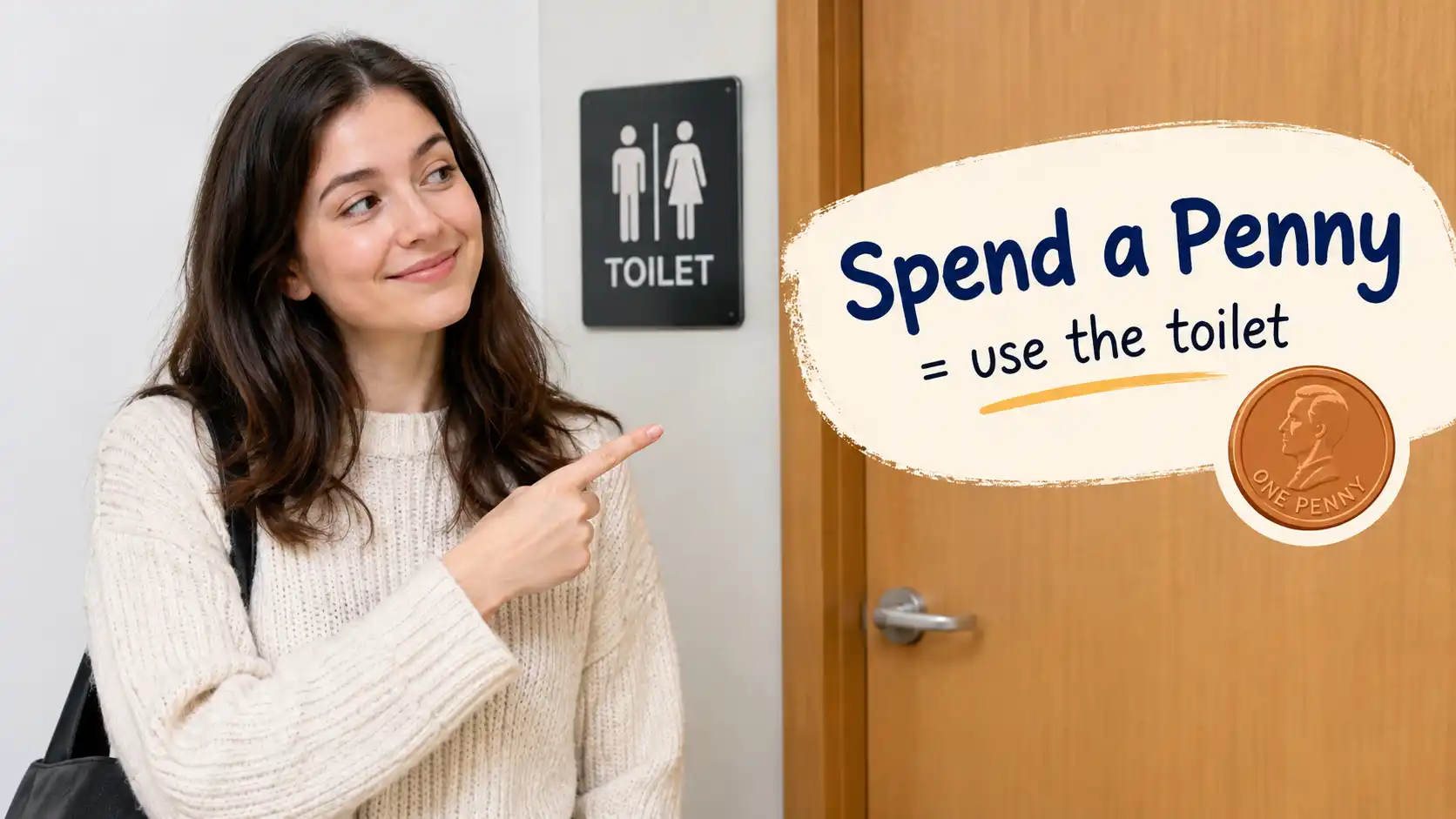
If you hear someone say spend a penny, they usually do not mean spending money on something small.
The phrase is an old British euphemism for going to the toilet, especially to urinate. It comes from the days when some public toilets charged a penny to enter.
Today, dictionaries describe spend a penny as old-fashioned British English, so you are more likely to see or hear it in older British speech, books, films, or humorous conversations.
The phrase can sound strange if you have never heard it before. Why would using a bathroom have anything to do with spending a coin? The answer is tied to the history of public toilets in Britain.
Quick Answer
The spend a penny meaning is to use the toilet or go to the bathroom. It is a polite and indirect way of talking about urinating.
For example, someone might say:
Excuse me, I need to spend a penny.
This means:
Excuse me, I need to use the toilet.
Cambridge Dictionary calls the expression a UK, old-fashioned idiom and describes it as a polite phrase for urinating. Oxford gives a similar definition, saying that people use it to avoid directly saying use the toilet.
| Phrase | Meaning | Style |
| Spend a penny | Use the toilet | Old-fashioned British |
| Go to the bathroom | Use the toilet | Common American |
| Go to the loo | Use the toilet | Common British |
| Use the restroom | Use the toilet | Common American, polite |
| Go to the toilet | Use the toilet | Common British |
So, if you see spend a penny in an older British story, the character probably needs to visit the bathroom.
What Does Spend a Penny Mean?
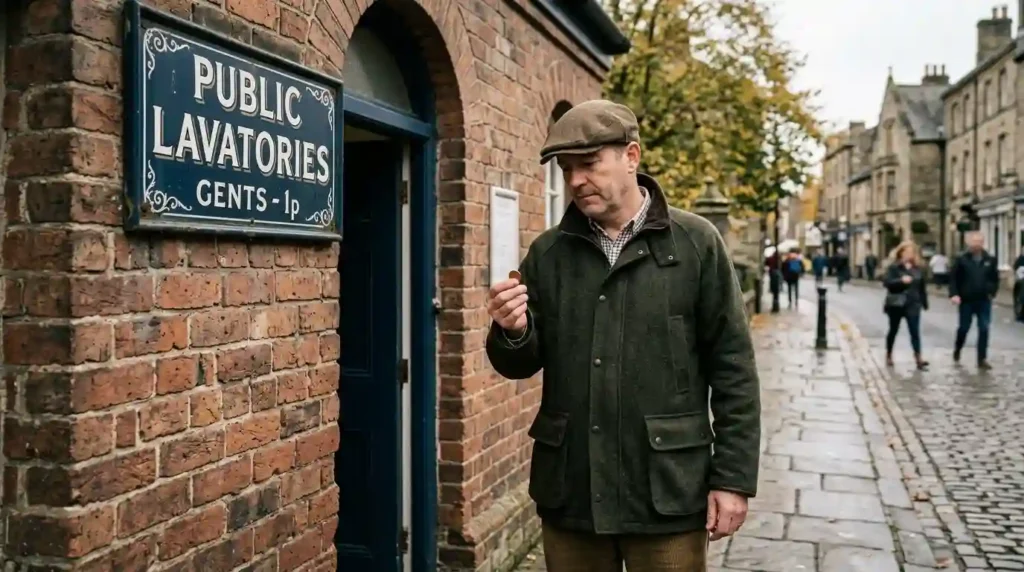
At its simplest, spend a penny means to go to the toilet.
It is a euphemism. A euphemism is a softer or more polite way to talk about something that may feel private, uncomfortable, or embarrassing.
Instead of saying:
I need to urinate.
a person could say:
I need to spend a penny.
The second sentence sounds less direct.
The phrase can also refer more generally to using a public toilet. Collins Dictionary defines it as meaning to urinate and connects the expression with the former cost of using a public lavatory.
The important point is that spend does not have its normal money-related meaning here. The phrase is an idiom. You should understand the whole expression rather than translating each word separately.
Is Spend a Penny About Money?
Not in modern usage.
The word penny is part of the phrase because the expression comes from a time when some public toilets required users to pay a penny.
So there is a real connection to money, but when someone says I need to spend a penny, they are normally not talking about shopping or buying something.
| What you hear | What it means |
| I need to spend a penny. | I need to use the toilet. |
| She went to spend a penny. | She went to the toilet. |
| We should stop so Dad can spend a penny. | We should stop so Dad can use the bathroom. |
Where Did Spend a Penny Come From?
The phrase is linked to old pay-to-use public toilets in Britain.
In the 19th century, some public toilets used coin-operated locks. A person could put a penny into the mechanism to unlock a toilet cubicle. This is the basic idea behind the expression: you literally had to spend a penny to use the facility.
One early example of these systems appeared at a public toilet near London’s Royal Exchange in the 1850s, according to historical phrase research. The phrase itself appears to be much newer than the toilet technology. The first recorded printed example commonly cited is from Hilda Lewis’s 1945 novel Strange Story.
This distinction matters. The toilets and penny charges existed in the 19th century, but that does not mean the exact phrase spend a penny was already common at that time.
In other words, the idea behind the expression is old, while the documented phrase is later.
Why Did People Say Spend a Penny?
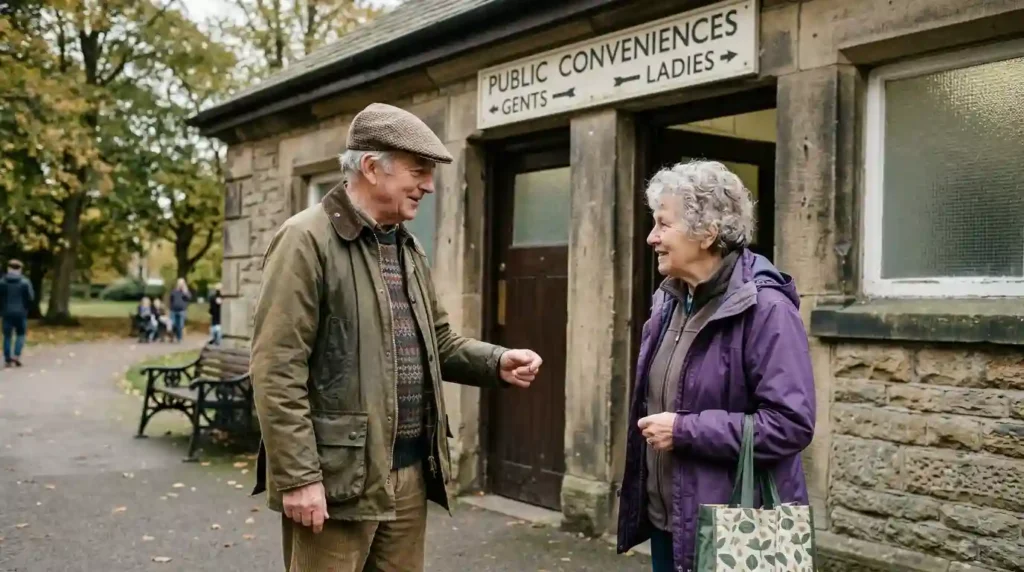
The phrase worked as a polite way to avoid directly discussing a private bodily function.
Talking openly about going to the toilet was often considered less polite than it is today. People therefore created indirect expressions such as powder my nose,answer nature’s call, and spend a penny.
Spend a penny was especially natural in British English because the expression had a clear connection to public toilets.
The phrase also had a playful quality. Someone could say:
I think I’ll spend a penny before we leave.
Everyone who knew the expression understood the meaning without the speaker needing to say I need to urinate.
That indirect style is one reason the phrase became recognizable as a euphemism.
Is Spend a Penny British or American?
Spend a penny is mainly associated with British English. Major dictionaries mark it as British or UK English and old-fashioned.
American English speakers may understand the expression, especially if they have encountered British books, movies, television, or other media. However, it is not a normal everyday American expression.
An American would be much more likely to say:
I need to use the bathroom.
or:
I need to use the restroom.
A British speaker today might say:
I need to use the toilet.
or:
I need to go to the loo.
Spend a penny is still understandable, but it has an old-fashioned feel.
| Variety of English | Natural expression |
| Modern American English | Go to the bathroom |
| Modern American English | Use the restroom |
| Modern British English | Go to the toilet |
| Modern British English | Go to the loo |
| Older British English | Spend a penny |
This difference is useful for English learners. If you are learning American English, you do not need to use spend a penny in normal conversation.
How to Use Spend a Penny Correctly
Grammatically, spend a penny works as a verb phrase.
You can use it with different subjects and tenses.
For example:
I need to spend a penny.
She went to spend a penny.
He said he had to spend a penny.
We stopped at the station so they could spend a penny.
The phrase normally keeps the words a penny. You should not change it to spend two pennies when using the idiom to mean going to the toilet.
Because it is old-fashioned, context matters. It may sound humorous, traditional, or slightly playful rather than completely normal.
Examples in Everyday Contexts
Here are some simple examples:
Can you wait a minute? I need to spend a penny.
Meaning: The speaker needs to use the toilet.
Grandma asked where she could spend a penny.
Meaning: Grandma asked where she could use the bathroom.
We stopped at the station because I needed to spend a penny.
Meaning: They stopped so the speaker could use the toilet.
He disappeared for a few minutes to spend a penny.
Meaning: He went to the bathroom for a short time.
These examples show that the phrase usually appears in casual conversation rather than formal writing.
Spend a Penny vs. Use the Bathroom
The biggest difference is age, region, and tone.
Use the bathroom is clear and common in American English. Go to the toilet is common in Britain. Spend a penny is much older and less common.
Imagine an American visitor hearing:
I’ll just spend a penny.
They might wonder If the person is going to buy something cheap.
A British person familiar with the expression will understand that the person means they need the toilet.
The safest modern expression depends on your audience.
| Situation | Better choice |
| Speaking with Americans | I need to use the bathroom. |
| Speaking with British people | I need to use the toilet. |
| Talking casually in Britain | I need to go to the loo. |
| Talking about old British language | Spend a penny |
| Writing about historical British speech | Spend a penny can fit the context |
Common Mistakes With Spend a Penny
One common mistake is taking the expression literally.
If someone says:
I need to spend a penny.
they usually do not mean:
I need to buy something that costs one penny.
The phrase is idiomatic.
Another mistake is assuming it is a common modern American expression. It is not. Dictionaries identify it as old-fashioned British English.
A third mistake is thinking the phrase always means paying a penny today. The historical connection explains the expression, but modern speakers use it as a set phrase.
Finally, do not use it simply because you want to sound British. Since it is dated, it may sound unusual in a normal modern conversation.
Is Spend a Penny Still Used Today?
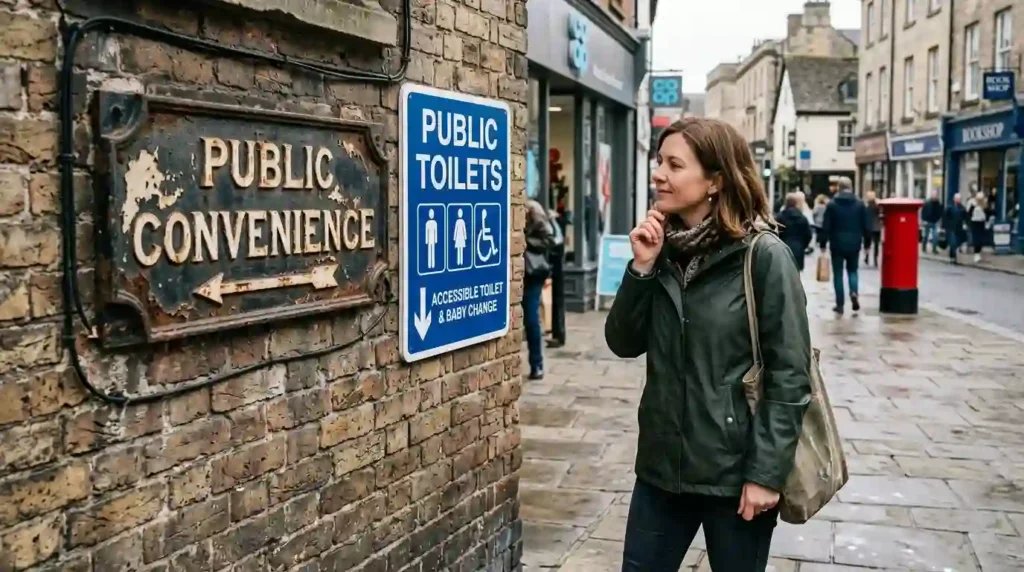
Yes, but it is much less common than it once was.
Cambridge and Oxford both mark it as old-fashioned. BBC Learning English has also used the expression as an example of an older British idiom and explained that many younger people may not know it.
One reason is simple: the historical situation behind the phrase has changed. Public toilet charges, coin systems, and everyday language have changed over time.
Phrase Finder notes that the expression became dated as charges changed. It also points to a 1977 Daily Telegraph headline, 2p to spend a penny, as evidence that the old phrase was already being treated as outdated.
Today, you are more likely to meet spend a penny in:
- Older books
- British television shows
- Historical stories
- Conversations with older British speakers
- Language-learning materials
- Articles about British slang and idioms
Why Spend a Penny Is Interesting
The phrase is a good example of how language keeps a record of everyday life.
Today, a person may say I need to use the bathroom, without thinking about the history of public toilets. But spend a penny preserves a small piece of British social history.
The words tell us something about the way public services once worked. They also show how people used polite language to discuss private matters.
Many idioms work this way. Their original meaning can disappear while the expression remains.
For example, English has many phrases connected to old tools, jobs, customs, and forms of payment. Once people forget the original situation, the phrase can sound strange.
That is exactly what happens with spend a penny.
FAQs
What does spend a penny mean?
Spend a penny means to use the toilet or go to the bathroom, especially to urinate. It is an old-fashioned British euphemism.
Is spend a penny a British phrase?
Yes. It is strongly associated with British English. Cambridge and Oxford both label it as old-fashioned British or UK English.
Why is it called spend a penny?
The phrase comes from old public toilets where users could have to pay a penny to enter or unlock a toilet cubicle.
Is spend a penny still commonly used?
No. It is understood, but it is considered old-fashioned and is much less common in everyday modern British English.
Can Americans use spend a penny?
Americans can understand and use it, but it may sound unusual or British. In everyday American English, use the bathroom or use the restroom is more natural.
Does spend a penny mean spending money?
Not in normal modern usage. It is an idiom meaning to use the toilet. Its connection with money comes from the historical penny charge for some public toilets.
Conclusion
The spend a penny meaning is simple: to go to the toilet or use the bathroom, especially to urinate. It is an old-fashioned British euphemism that comes from the time when some public toilets required a penny to unlock or use a cubicle.
The phrase is interesting because it connects everyday language with British history. What sounds like a strange sentence today once had a clear connection to the cost of using a public toilet.
If you are reading an older British book or watching a British show and hear someone say, I need to spend a penny, you now know exactly what they mean.
For modern everyday English, however, expressions such as use the bathroom,use the restroom,go to the toilet, or go to the loo will usually sound more natural.
So, the next time you see this unusual phrase, remember: it is not really about spending money it is about going to the bathroom.

Muhammad Haroon is the founder and writer behind Factnora.com, a platform focused on sharing interesting, useful, and reliable information. His work covers biographies, history, facts, and stories that help readers discover something new in a simple and engaging way. Through factnora, Muhammad aims to make learning enjoyable while presenting information in a clear and reader-friendly style.